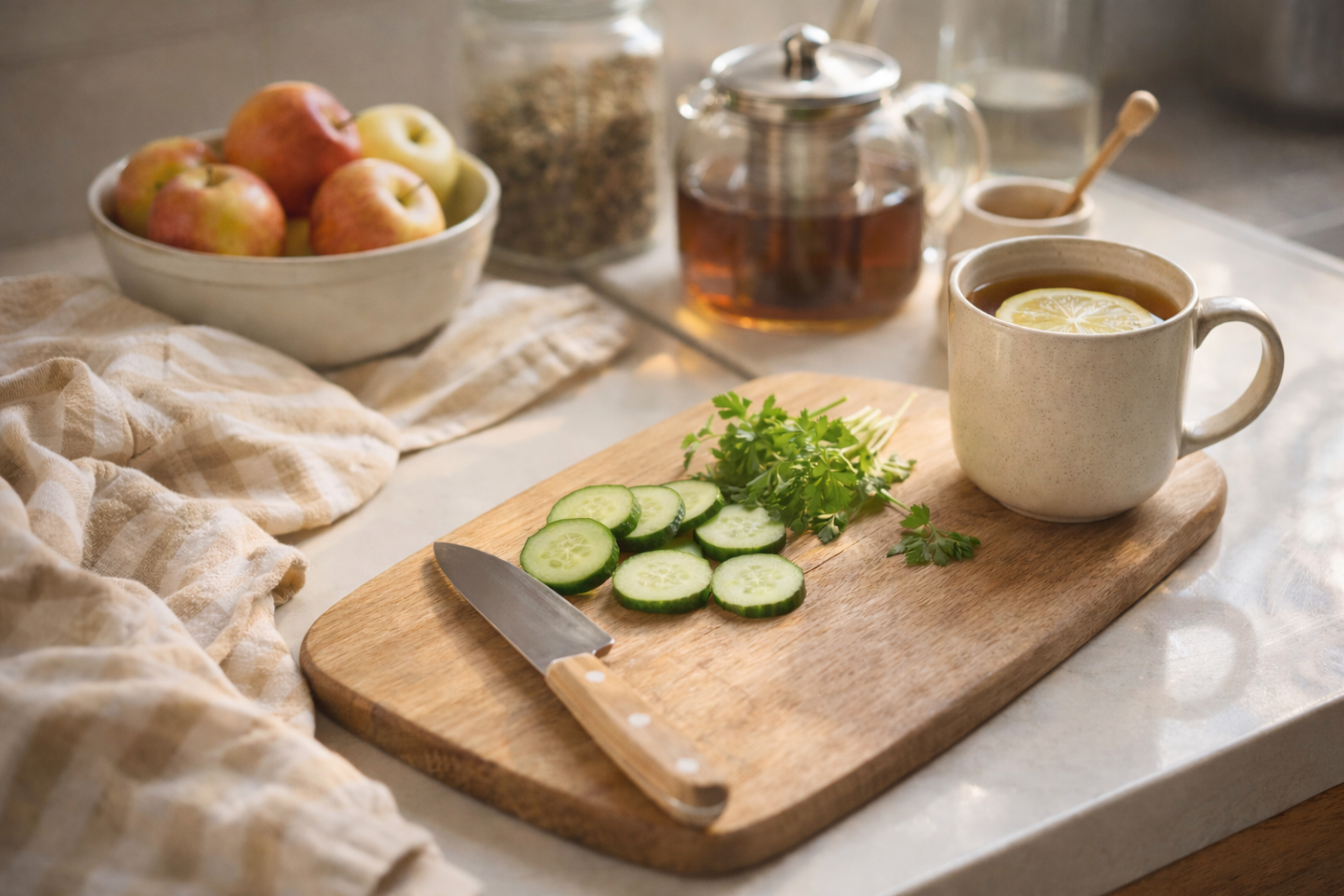
Some caregiving days leave very little energy for meals.
Not because you do not care. Not because you are unprepared. But because caregiving often asks you to make many small decisions all day long. By the time the next meal or snack comes around, even simple kitchen tasks can feel heavier than they should.
This gentle kitchen prep is not about doing more. It is about making the next part of the day feel a little easier, calmer, and more manageable for both you and the person you care for.
On tired days, I try to think less about meal prep in the big, organized sense—and more about putting one or two helpful things in place. A cleared corner. A ready snack. A mug near the kettle. A small step now that softens the next moment later.
If your days feel full, tender, or unpredictable, here are five gentle kitchen prep ideas that can help.
1. Clear one useful space
You do not need a perfectly tidy kitchen. You only need one spot that feels usable.
That might be:
- one section of the counter
- the table corner where you prepare tea
- a small area near the sink
- the place where breakfast usually comes together
Clearing one useful space can reduce visual stress and make the next task feel less overwhelming. When the kitchen already feels crowded, even a tiny clear area can bring a surprising sense of relief.
For caregivers, this matters because so much of daily life happens in short windows. You may only have a few quiet minutes to prepare a drink, plate a snack, or get something ready before attention is needed elsewhere.
A small prepared space can support a calmer rhythm in the same way that a ready activity basket can soften the day. If you enjoyed creating simple supports ahead of time, you might also like The Cozy Activity Basket: A Gentle Setup for Calm, Low-Stress Days.
2. Put one helpful thing in place
When energy is low, it helps to leave out one thing that makes the next step easier.
That could be:
- a favorite mug beside the kettle
- a tea tray ready for later
- a bowl and spoon set out for yogurt or oatmeal
- napkins and a placemat ready on the table
- a water bottle or cup in an easy-to-see place
This is especially helpful in caregiving because familiar, visible items can reduce friction. Instead of starting from nothing later, you are leaving a gentle cue for yourself.
You are not trying to “get ahead” in a perfect way. You are simply making the next task easier to begin.
Small supports like this can also help reduce decision fatigue, which shows up in many areas of caregiving. That is one reason I love simple, limited choices in daily routines. If that idea speaks to you, you may also enjoy Dressing with Dementia: A Gentle Two-Choices Approach for Calmer Mornings.
3. Check for one easy meal or snack option
You do not need a full meal plan. Just make sure there is one easy option you can reach for later without much thought.
That might be:
- yogurt and soft fruit
- toast and a spread
- soup and crackers
- a simple sandwich
- sliced banana with oatmeal
- cheese and soft bread
- applesauce, pudding, or a familiar comfort food
For many caregivers, the hardest part is not always the making. It is the deciding. When the day has already taken a lot out of you, even choosing what to serve can feel like too much.
A quick fridge check can help answer one kind question in advance:
What is the easiest thing we could have later?
That answer does not need to be impressive. It only needs to be realistic.
When I want simple ideas that do not feel too demanding, I come back to these easy large-print recipes for gentle kitchen days.
4. Prep one small thing for later
If you have five extra minutes, use them for one tiny future kindness.
Not a full prep session. Just one small thing.
You might:
- wash a few berries
- slice a banana
- portion crackers into a bowl
- put sandwich ingredients together on one shelf
- fill the kettle
- place tomorrow’s breakfast items where you can reach them easily
These are quiet tasks, but they can make a meaningful difference later—especially when the day shifts quickly, when someone is tired, or when you are running on very little energy yourself.
I think of this as gentle prep, not productive prep. The goal is not efficiency for its own sake. The goal is to make later feel softer.
Caregiving often works best when we build these tiny cushions into the day: one less decision, one less reach, one less rushed moment.
That same approach can help in other parts of home life too. If evenings or personal care routines feel especially difficult, you may also find comfort in A Calmer Bathing Routine (When Shower Time Feels Hard).
5. Leave the kitchen easier, not perfect
Before you leave the kitchen, do one small reset that helps your future self.
Maybe that means:
- rinsing one bowl
- wiping one counter
- putting leftovers where you can see them
- setting out breakfast basics
- making sure the next drink setup feels simple
This is not about finishing everything. It is about leaving the space in a gentler state than you found it.
There is a big difference.
Caregivers carry so much invisible work already. The kitchen does not need to become another place where you feel behind. A softer standard can help protect your energy and make daily life feel more livable.
“Easier” is enough. “Ready enough” is enough. “Good enough for today” is enough.
A gentle note for tired caregiving days
If you are caring for someone at home, kitchen routines are rarely just about food. They are about comfort, timing, familiarity, and energy. They are about meeting needs while trying to protect your own capacity too.
That is why I come back to these small rituals again and again.
Not because they solve everything.
But because they make the next moment less hard.
And sometimes, that is the kindest kind of help.
If you are building more gentle rhythms into your caregiving days, you may also like to browse my Caregiver Resources page, where I keep a growing collection of supportive ideas, calm activities, and practical encouragement for everyday care.