Blog

  • Why I Create Printable Caregiver Resources for Seniors and Families

    Why I Create Printable Caregiver Resources for Seniors and Families

    Caregiving asks so much of a person.

    It asks for patience, strength, flexibility, and love — often all at once. It can be deeply meaningful, but it can also be exhausting, emotional, and overwhelming in ways that are hard to put into words.

    This is one of the reasons why creating caregiver resources has become so important to me.

    This work is personal to me, and it is also closely connected to the work I do. Because of that, I care deeply about creating gentle, practical tools that can offer a little support in everyday life.

    I know that help does not always have to come in big ways.

    Sometimes it is a simple printable.
    A page that brings a little more structure to the day.
    A gentle activity that creates a calmer moment.
    A conversation prompt that helps connection feel easier.
    A resource that offers a bit of support when someone is already carrying so much.

    That is the heart behind LimePage.

    I create printable caregiver resources, dementia-friendly activities, and supportive tools for seniors and families because I know how much small, thoughtful help can matter in daily life.

    These resources are not meant to solve everything. But I hope they can make one part of the day feel lighter, calmer, more supported, or a little less lonely.

    My goal is to create materials that feel simple, kind, and truly useful — resources that can support everyday caregiving with a little more ease, comfort, and connection.

    If caregiving is part of your life too, I hope you know you are not alone. And if something I create can offer even a little comfort, structure, or encouragement, then it means a great deal to me.

    If you’d like to explore my printable caregiver resources and supportive tools, you can find them here:

    Thank you for being here. I hope these resources can bring a small sense of support and calm to your everyday life.

  • Gentle Printable Support for Caregivers: Calm Moments, Quiet Activities, and Small Daily Tools

    Gentle Printable Support for Caregivers: Calm Moments, Quiet Activities, and Small Daily Tools

    Caregiving asks a lot from us.

    There are practical tasks, of course — meals, appointments, routines, reminders — but there is also the quieter part of caregiving: emotional fatigue, mental overload, low-energy afternoons, and the need for something gentle for both you and your loved one.

    On hard days, support does not always need to be big or complicated.

    Sometimes a small printable tool can help more than we expect: a calming prompt, a quiet activity, a reflection page, or a simple tracker that brings a little more clarity.

    In this post, I wanted to gather a few gentle printable supports that can help in different ways — for caregivers, for seniors, and for those moments when life needs to feel a little softer.

    1. When you need a quick emotional reset

    Some days, you simply need a pause.

    My Caregiver Calm Cards were created for those moments — the ones when you feel overwhelmed, tired, overstimulated, or emotionally stretched.

    This printable set includes calm cards, grounding cards, and a few simple reflection pages. The goal is not to add more to your plate, but to offer small, ready-to-use support for hard caregiving days.

    They can be helpful when:

    • you need a calmer response
    • you need one small next step
    • you want a grounding prompt nearby
    • you need a reminder that you are allowed to need support too

    If you’ve been trying to create a gentler home environment, this also pairs well with my post on creating a calm corner at home for seniors.

    2. When your loved one needs a quiet activity

    Not every activity needs to be exciting.

    Sometimes the best activities are the simple ones — especially on low-energy days, quiet afternoons, or moments when too much stimulation does not help.

    My Dementia Activity Bundle for Seniors was made with that in mind. It offers gentle printable activities that support calm engagement, routine, and connection without a lot of prep.

    This kind of printable can be useful when:

    • you need a low-prep activity
    • your loved one benefits from quiet structure
    • you want something simple for an afternoon at home
    • you need easier options on tiring days

    It connects naturally with my post on 7 Quiet Afternoon Activities for Low-Energy Days, where I talk more about calm, manageable activity ideas.

    3. When you need a soft pause of your own

    Caregivers need gentle activities too.

    Not every form of rest looks like lying down. Sometimes it looks like doing something simple with your hands for a few quiet minutes.

    That is why I think printable coloring pages can actually fit into caregiver support in a very natural way.

    My Adult Coloring Pages – Cozy Animals are a low-pressure, calming option for moments when you want something quiet and uncomplicated.

    They can be especially nice:

    • after a long day
    • during a quiet evening
    • when you want a screen-free pause
    • when you need something soothing without effort

    Small creative pauses matter more than we sometimes realize.

    4. When caregiving overlaps with your own body changes

    Many caregivers are also moving through their own physical changes, stress, poor sleep, or shifting energy levels.

    That part matters too.

    My Menopause Wellness Tracker is a gentle printable tool for tracking mood, symptoms, energy, and patterns over time.

    At first, it may seem a little different from the other printables in this post, but I think it still belongs here. Caregiving does not happen outside of our own bodies. Our own stress, cycles, and exhaustion come with us into daily care.

    A simple tracker can help bring a little more awareness and support during a demanding season.

    Support can be small

    One thing I come back to often is this:

    Support does not always need to be life-changing to be meaningful.

    Sometimes it is a card that helps you breathe.
    Sometimes it is a quiet activity for the afternoon.
    Sometimes it is a coloring page that helps you slow down.
    Sometimes it is a tracker that helps you understand your own body a little better.

    These are small things.

    But in caregiving, small things are often the things we can actually use.

    A few gentle printable resources

    If one of these feels helpful for this season, I’ve linked them here:

    You may also enjoy these related posts:

    Caregiving asks a lot. I hope one of these gentle tools helps make a day feel a little lighter.

  • A Gentle Way to Spark Connection: Seasonal Stories for Seniors

    A Gentle Way to Spark Connection: Seasonal Stories for Seniors

    Some days, conversation doesn’t come easily.

    Words feel further away. Questions feel too big. And even simple moments can feel quiet in a way that’s hard to reach.

    In these moments, it helps to have something gentle to hold onto.

    A small starting point.

    A soft invitation into connection.


    Why Stories Work So Well

    Stories don’t ask for perfect memory.

    They don’t require effort or correct answers.

    Instead, they offer:

    • familiarity
    • emotion
    • small entry points into conversation

    A season, a feeling, a simple scene — sometimes that’s all it takes to open a door.


    A Softer Way to Connect

    Seasonal themes can make everything feel more natural.

    Spring, summer, autumn, winter — each one carries its own quiet memories.

    Instead of asking direct questions, you can begin with something like:

    • “This reminds me of spring mornings…”
    • “I used to love this time of year…”

    And let the moment unfold from there.


    Making It Easy (for You, Too)

    Caregiving already asks so much.

    You don’t need to create activities from scratch.

    Having something prepared — something gentle and ready — can make a real difference on low-energy days.

    That’s why I created this:

    👉 Seasonal Stories Printable Bundle for Seniors

    A soft collection of printable story-based pages designed to:

    • spark conversation
    • support memory gently
    • create calm, shared moments

    No pressure. No right answers. Just connection.


    When to Use Gentle Story Prompts

    These work especially well:

    • on quiet afternoons
    • during low-energy days
    • when conversation feels difficult
    • in dementia-friendly routines

    If you’re already exploring quiet activities, you might also like:
    👉 7 Quiet Afternoon Activities for Low-Energy Days


    Create a Calm Space Around It

    The experience matters just as much as the activity.

    A soft corner, a warm drink, a quiet table — these small details help create a sense of safety and ease.

    You can find a simple way to set this up here:
    👉 How to Create a Calm Corner at Home for Seniors


    A Gentle Note for Caregivers

    You don’t have to carry the whole conversation.

    You don’t have to fill every silence.

    Sometimes, a simple prompt is enough.

    Sometimes, just sitting together is enough.

    And sometimes, connection happens in the quietest ways.


    Looking for More Gentle Ideas?

    You can explore more calming activities and caregiver support here:

    👉 Caregiver Resources for Seniors at Home

  • How to Create a Calm Corner at Home for Seniors (A Gentle Setup Guide)

    How to Create a Calm Corner at Home for Seniors (A Gentle Setup Guide)

    Some moments don’t need more activity.

    They need less.

    Less noise. Less pressure. Less expectation.

    A calm corner can become a small, gentle place where both seniors and caregivers can pause, breathe, and simply be.

    Here’s how to create one at home — in a way that feels soft, inviting, and easy to maintain.


    What Is a Calm Corner?

    A calm corner is a small, thoughtfully arranged space that invites quiet moments.

    It’s not about doing more — it’s about making space for:

    • rest
    • gentle engagement
    • simple connection

    It can be a chair by the window, a small table, or even just a tray that you bring out when needed.


    1. Choose a Quiet, Light-Filled Spot

    Look for a place with:

    • natural light
    • minimal noise
    • a sense of comfort

    This could be:

    • near a window
    • beside a favorite chair
    • at a small table

    The goal is not perfection — just a feeling of ease.


    2. Keep It Simple (Really Simple)

    A calm corner works best when it’s not overwhelming.

    Start with just a few items:

    • a soft blanket
    • a warm drink
    • one small activity

    Too many choices can feel stressful on low-energy days.


    3. Add One Gentle Activity

    Choose something that feels easy and familiar.

    For example:

    • a coloring page
    • a word search
    • a simple sorting task

    If you’re looking for ideas, you can explore these here:
    👉 7 Quiet Afternoon Activities for Low-Energy Days


    4. Include Something Comforting

    This could be:

    • a favorite cup
    • a soft texture
    • a small personal object

    Comfort doesn’t have to be big — often it’s something small and familiar.


    5. Let It Be Flexible

    Some days, the calm corner will be used.

    Some days, it won’t.

    That’s okay.

    It’s not a routine to follow — it’s a space that’s simply there when needed.


    6. Use It for Connection, Not Just Activity

    The calm corner isn’t only for doing something.

    It’s also for:

    • sitting together
    • sharing a quiet moment
    • simply being present

    Sometimes, that’s enough.


    A Gentle Note for Caregivers

    You don’t have to fill every moment.

    You don’t have to create perfect routines.

    A calm corner is not about doing more —
    it’s about allowing less.

    And often, that’s where the most meaningful moments happen.


    Looking for More Gentle Support?

    You can explore more calming activities, routines, and caregiver ideas here:

    👉 Caregiver Resources for Seniors at Home

  • 7 Quiet Afternoon Activities for Low-Energy Days (Seniors & Caregivers)

    7 Quiet Afternoon Activities for Low-Energy Days (Seniors & Caregivers)

    Some afternoons feel slower than others.

    Energy is lower. Focus is softer. And even simple activities can feel like too much.

    On these days, it helps to have a few gentle, low-pressure ideas — the kind that invite calm, not effort.

    Here are seven quiet afternoon activities that can bring comfort, connection, and a sense of ease at home.


    1. Gentle Coloring Together

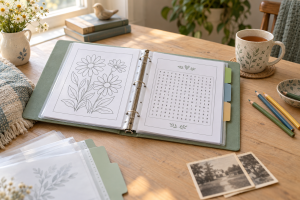
    A simple coloring page and a few soft pencils can create a calm, focused moment.

    There’s no right or wrong way to do it — just slow movement, quiet attention, and maybe a soft conversation unfolding along the way.

    If you enjoy this kind of quiet creative time, you might also like creating a small, inviting setup like this:
    👉 The Cozy Activity Basket: A Gentle Setup for Calm, Low-Stress Days

    Tip: Choose large-print or simple floral designs for easier engagement.


    2. Word Searches (With a Twist)

    Word searches can be more than just a puzzle.

    They can spark memories, stories, and small moments of connection — especially when you pause to talk about the words you find.

    If you’d like more gentle ideas like this, you can explore this here:
    👉 A Gentle Way to Spend Time Together: Word Searches for Seniors (and the Stories They Unlock)

    Tip: Keep it light. There’s no need to finish.


    3. A Cup of Tea Ritual

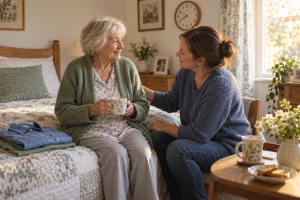
    Sometimes, the activity is simply sitting together.

    Prepare a warm drink, place it on a tray, and take a few minutes to pause.

    No expectations. No agenda. Just a shared moment.


    4. Sorting or Folding

    Folding towels, sorting buttons, or organizing simple items can feel grounding and familiar.

    These small tasks often bring a quiet sense of purpose — without pressure.


    5. Listening to Gentle Music

    Soft, familiar music can shift the atmosphere of the entire room.

    It can calm restlessness, lift mood, and create a sense of safety.

    Tip: Choose songs that feel familiar and comforting.


    6. Looking Through Old Photos

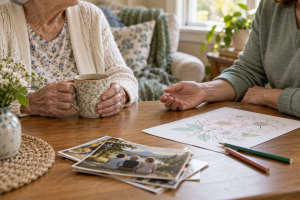
    Flip through a small stack of photos together.

    There’s no need to remember everything — even a single smile, a color, or a place can be enough to create connection.


    7. A Simple Table Activity

    Set up a small, inviting space on the table:

    • a coloring sheet
    • a few pencils
    • a small object (like a flower or fabric)

    Even just sitting near it can gently invite engagement.


    A Gentle Note for Caregivers

    Low-energy days are not empty days.

    They are quieter days. Softer days. Slower days.

    And often, these are the moments where connection happens most naturally — without pressure, without expectations.

    You are doing enough.


    Looking for More Gentle Ideas?

    If you’d like more calming activities, routines, and gentle caregiver support, you can explore everything here:

    👉 Caregiver Resources for Seniors at Home

  • A Gentle Tea Time Routine for Seniors and Caregivers

    A Gentle Tea Time Routine for Seniors and Caregivers

    Not every meaningful moment needs to be an activity.

    Sometimes, a quiet cup of tea shared at the same table can offer comfort, connection, and a small sense of rhythm in the day.

    For seniors and caregivers, gentle routines often matter more than elaborate plans. A simple tea time can become one of those soft daily anchors — something familiar, calming, and easy to return to.

    It does not need to be formal or complicated.

    It can simply be a warm drink, a favorite mug, a small snack, and a few peaceful minutes together.

    Why tea time can feel so comforting

    There is something naturally calming about tea time.

    The warmth of the cup, the smell of the drink, the quiet pause in the day, and the familiar setup of sitting down together can all help create a sense of ease.

    For some seniors, tea time may also bring back memories of afternoon visits, favorite mugs, biscuits on a plate, or quiet moments in the kitchen.

    That is part of what makes it meaningful.

    It is not only the tea itself, but the feeling around it.

    Keep the routine simple

    A gentle tea time routine does not need many parts.

    It might be as simple as:

    • making tea or another warm drink
    • placing it in a favorite cup
    • adding a biscuit, fruit, or toast
    • sitting in the same comfortable place
    • keeping the moment quiet and unhurried

    Small routines often feel more supportive when they are easy to repeat.

    The goal is not to create a perfect ritual.

    The goal is to create a soft, familiar moment that feels good to return to.

    Choose what feels comfortable and familiar

    Tea time can be adapted to the person, the day, and the energy available.

    You might choose:

    • tea with lemon
    • herbal tea
    • warm milk
    • decaf coffee
    • a small fruit plate
    • yogurt
    • a favorite biscuit
    • toast with jam

    What matters most is that it feels pleasant and manageable.

    On lower-energy days, even a very small version of tea time can still feel special.

    Let the table feel inviting

    A little visual comfort can make a simple moment feel more intentional.

    You might add:

    • a favorite mug
    • a soft napkin
    • a small flower in a vase
    • a pretty plate
    • a seasonal card nearby
    • gentle daylight from a nearby window

    These small touches do not need to create extra work.

    Even one detail can help the table feel calm and cared for.

    If you enjoy creating low-pressure activity setups at home, you may also like this post on the cozy activity basket for calm, low-stress days.

    Pair tea time with something gentle

    Tea time does not always have to stand alone.

    Sometimes it works well alongside something soft and undemanding.

    You might pair it with:

    • looking through family photos
    • a simple word search
    • a floral coloring page
    • quiet music
    • sitting by the window
    • a few conversation prompts
    • noticing flowers or birds outside

    This can help the moment feel gently shared without asking too much.

    If you are looking for more low-stress ideas to keep nearby, these calm table activities for seniors on low-energy days may also be helpful.

    Use tea time as a steady point in the day

    Many seniors feel better with familiar rhythms.

    Caregivers often do too.

    A regular tea time — whether it is in the morning, afternoon, or early evening — can offer a sense of steadiness when the day feels scattered, tiring, or emotionally heavy.

    It does not need to happen at the same exact minute every day.

    It is enough for it to feel familiar.

    A small repeated comfort can matter a great deal.

    Keep conversation gentle and open

    Tea time can create a natural space for light conversation.

    You might talk about:

    • favorite teas or drinks from years ago
    • visitors who used to come by
    • spring or seasonal changes outside
    • favorite foods for afternoon tea
    • family kitchen memories
    • simple things that felt nice that day

    There is no need to force conversation.

    Quiet can be part of the comfort too.

    Let it stay simple on difficult days

    Some days will feel quieter, lower-energy, or more tender than others.

    On those days, tea time does not have to be fully set up to still matter.

    A single mug, a small snack, and a few minutes together may be enough.

    That still counts.

    For seniors living with dementia, simple familiar routines can feel especially supportive. This gentle post on dressing with dementia for calmer mornings shares a similar low-pressure approach to daily care.

    A soft routine can still be meaningful

    A gentle tea time routine may look very ordinary from the outside.

    But ordinary moments are often the ones that hold the most comfort.

    For seniors and caregivers, a quiet cup of tea can offer warmth, familiarity, and a little connection in the middle of the day.

    And often, that is more than enough.

    If you are looking for more calm, comforting ideas, you may also enjoy:

  • Calm Table Activities for Seniors on Low-Energy Days

    Calm Table Activities for Seniors on Low-Energy Days

    Some days feel quieter than others.

    If you are looking for calm table activities for seniors on low-energy days, simple and familiar ideas can help bring comfort, focus, and connection at home. On those days, even simple activities can feel like too much if they require too much setup, too much movement, or too much concentration.

    That is why calm table activities can be so helpful.

    A gentle activity at the table can offer comfort, connection, and just enough focus to make the day feel a little steadier, without adding pressure.

    If you are looking for low-stress ideas to use at home, here are a few calm table activities for seniors that can work especially well on quieter days.

    Try a simple word search or puzzle

    Word searches, large-print puzzles, and gentle matching games can be a good fit for low-energy days because they offer structure without needing too much from the person doing them.

    You do not need to treat them like a task to complete.

    Sometimes it is enough to look for a few words together, talk through the page, or simply sit alongside someone while they take their time.

    If the day feels especially quiet, even a few minutes can be enough.

    Look through postcards, photos, or picture books

    Visual activities can feel easier than hands-on tasks when energy is low.

    You might look through:

    • old family photos
    • scenic postcards
    • nature books
    • flower pictures
    • magazines with soft, familiar images

    This can create a calm focus point without needing much effort.

    It can also gently lead into conversation, memory-sharing, or simply a quiet moment together.

    Sort small, familiar items

    Sorting can feel soothing, especially when the objects are simple and pleasant to handle.

    You might sort:

    • buttons
    • postcards
    • seed packets
    • colored napkins
    • fabric squares
    • greeting cards
    • large beads or craft items

    There is no need to make it formal.

    Just arranging, grouping, or noticing colors and shapes can be enough to create a sense of ease.

    Color or trace something simple

    Coloring does not have to be complicated to feel calming.

    A floral page, a large simple shape, or even tracing around an image can offer a gentle activity without much pressure.

    This can work well for seniors who enjoy having something to do with their hands but may feel overwhelmed by more detailed crafts.

    If soft, ready-to-use activity ideas are helpful in your home, you may also like this post on the cozy activity basket for calm, low-stress days.

    Share tea and keep the activity nearby

    Sometimes the calmest table activity is simply having something present, without making it the center of the moment.

    A word search, a photo book, or a few sorted objects can rest on the table while you share tea, sit quietly, or talk a little.

    This kind of setup can feel less demanding than saying, “Let’s do an activity now.”

    It allows the moment to stay open and low-pressure.

    Use seasonal items to make the table feel fresh

    A low-energy day does not need to feel dull.

    Sometimes one small seasonal touch can change the mood of the table.

    You might add:

    • a small vase of flowers
    • a pastel napkin
    • a favorite mug
    • a bowl of citrus fruit
    • a spring picture or card

    This can make the activity space feel more inviting without creating more work.

    If you are looking for gentle seasonal inspiration, you may also enjoy these simple spring activities for seniors at home.

    Keep routines gentle and familiar

    Low-energy days often go more smoothly when there are fewer surprises.

    That is why calm table activities work best when they feel familiar, easy to begin, and easy to leave.

    There is no need to finish anything.

    There is no need to stay focused for long.

    The value is not in how much gets done.

    The value is in creating a small moment of comfort and steadiness.

    For seniors living with dementia, simple familiar choices can matter even more. This gentle post on dressing with dementia for calmer mornings shares a similar low-pressure approach.

    Let quiet days stay quiet

    It can be tempting to try to “lift” a low-energy day by adding more.

    But often, what helps most is less.

    A calm table activity can be enough.

    A few minutes with tea, a simple page, a flower on the table, or a familiar object in hand may be all that is needed to bring a little calm and connection into the day.

    That still counts.

    Small activities can still bring comfort

    Not every meaningful activity has to be lively or productive.

    On low-energy days, the gentlest table activities are often the most helpful.

    They offer just enough structure, just enough focus, and just enough togetherness — without asking too much.

    And sometimes, that is exactly what the day needs.

    If you are looking for more low-stress ideas, you may also enjoy:

  • A Gentle Kitchen Reset for Caregivers (When Everything Feels Too Much)

    A Gentle Kitchen Reset for Caregivers (When Everything Feels Too Much)

    Caregiving often happens in the middle of everything else.

    This gentle kitchen organization for caregivers is not about perfection — it’s about making everyday life a little easier.

    Meals to prepare. Small routines to hold together. Decisions to make, over and over again.

    And sometimes, it’s not the big things that feel overwhelming.

    It’s the small ones.

    Like opening a kitchen cabinet and facing a quiet kind of chaos — mismatched containers, missing lids, things you don’t quite need but keep anyway.

    This gentle kitchen reset isn’t about organizing perfectly.

    It’s about making daily life just a little easier.


    The Quiet Weight of Small Decisions

    Every extra choice takes energy.

    Which container fits? Where is the lid? Is this the right size?

    On low-energy days, even these tiny decisions can feel like too much.

    Simplifying your kitchen doesn’t just save time.

    It softens the day.


    A Gentle Reset (No Pressure, No Perfection)

    You don’t need a full clean-out.

    Start small.

    Take out all your containers and lids, and simply look at what’s there.

    No rush. No pressure to finish.

    Just noticing is enough to begin.


    Keep Only What Feels Easy

    Choose a small number of containers that:

    • match easily
    • are simple to open and close
    • feel manageable

    Let go of:

    • mismatched pieces
    • broken lids
    • anything that adds friction

    This isn’t about having less.

    It’s about having what works.


    Make Everyday Moments Simpler

    A calmer kitchen makes small routines easier:

    • preparing a simple meal
    • storing leftovers
    • packing something for later

    These are quiet, repeated moments in caregiving.

    And when they’re easier, the whole day feels lighter.


    Keep It Visible and Accessible

    Place your chosen containers where they’re easy to reach.

    Avoid stacking too much.

    The goal is to reduce searching, lifting, and decision-making.

    Ease over efficiency.

    Always.


    Let It Stay Simple

    It doesn’t have to stay perfect.

    It doesn’t have to stay organized forever.

    This is not a system to maintain.

    It’s a gentle reset you can return to, whenever things start to feel heavy again.


    A Gentle Note for Caregivers

    You don’t need to fix everything.

    You don’t need to organize your whole home.

    Sometimes, easing one small corner of daily life is enough.

    And sometimes, that small shift changes more than you expect.


    Looking for More Gentle Support?

    If you’d like more calming ideas, soft routines, and simple ways to support everyday caregiving, you might find these helpful:

    👉 7 Quiet Afternoon Activities for Low-Energy Days

    👉 How to Create a Calm Corner at Home for Seniors

    Or explore everything here:
    👉 Caregiver Resources for Seniors at Home

  • Simple Spring Activities for Seniors at Home

    Simple Spring Activities for Seniors at Home

    Spring does not have to be busy to feel refreshing.

    For many seniors, the season can be welcomed in very simple ways at home. A little more light, a favorite drink by the window, a calm activity at the table, or a small seasonal touch can make the day feel softer and more alive.

    If you are caring for an older loved one, spring activities do not need to be elaborate to feel meaningful.

    Often, the best ones are simple, low-pressure, and easy to enjoy together.

    Here are a few gentle spring activities for seniors at home that can bring comfort, connection, and a quiet sense of season.

    Look through spring flowers, gardens, or nature photos

    Sometimes a simple visual activity can open the door to conversation and memory.

    You might look through a gardening magazine, a spring-themed picture book, old seed catalogs, or printed photos of flowers and gardens.

    This can be especially nice for seniors who enjoy nature but may not feel able to spend much time outdoors.

    You can keep it very easy by simply sitting together and noticing what stands out.

    You might ask:

    • Which flowers do you like most?
    • Did you ever grow anything in a garden?
    • What signs of spring did you notice first when you were younger?

    If you would like a more hands-on seasonal idea, this one-pot garden activity for caregivers and seniors can also be a lovely way to bring spring indoors.

    Arrange a small vase of flowers

    A few flowers can be enough to make the day feel different.

    You do not need a large bouquet or a formal arrangement. Even a few tulips, daffodils, or simple grocery store flowers can create a calm and cheerful moment.

    You might:

    • trim stems together
    • choose a favorite vase
    • place the flowers on the table
    • talk about favorite spring colors
    • enjoy the arrangement over tea later in the day

    This is a gentle activity that can feel creative without becoming tiring.

    Share tea and a simple spring snack

    Not every seasonal activity has to feel like a project.

    Sometimes sharing a warm drink and a small snack is enough to make the afternoon feel more intentional.

    A simple spring tea moment might include:

    • tea with lemon
    • berries or sliced fruit
    • toast with jam
    • a favorite biscuit
    • yogurt with fruit

    This can be a lovely time for quiet conversation, or simply a calm pause in the day.

    Try a simple table activity

    Table activities can work especially well on low-energy days.

    You might try:

    • a spring-themed word search
    • coloring a floral page
    • sorting seed packets
    • matching pastel-colored items
    • arranging postcards or pictures with spring scenes

    These kinds of activities are often easier to begin than larger projects, and they can be adapted based on attention, energy, and mood.

    If gentle, ready-to-use ideas are helpful in your home, you may also enjoy this post on the cozy activity basket for calm, low-stress days.

    Sit near a window and notice the season

    A spring activity can be as simple as noticing what has changed.

    If going outside feels difficult, sitting by a window can still offer a sense of season.

    You might notice:

    • birds in the garden
    • brighter light in the room
    • leaves returning to trees
    • rain on the window
    • people walking outside in lighter clothes

    This can be paired with tea, quiet music, or a short conversation.

    It may seem like a small thing, but gentle observation can bring a lot of calm.

    Talk about spring memories

    Spring often brings back memories in a natural way.

    You might talk about:

    • spring cleaning routines from long ago
    • Easter clothes or church services
    • gardens and vegetables
    • hanging laundry outside
    • favorite spring recipes
    • family walks or visits

    There is no need to ask too many questions.

    Often, one small memory is enough to open the conversation.

    Keep seasonal touches soft and simple

    A spring activity does not always need to be something you do.

    Sometimes it can be something you add gently to the space around you.

    You might bring in:

    • a pastel napkin
    • a floral mug
    • a bowl of citrus fruit
    • a spring card on the table
    • soft seasonal colors in a blanket or cushion

    Even small color changes can affect how a room feels. If that feels relevant in your situation, this post on why colors matter in dementia care may also be helpful.

    Let spring feel gentle, not busy

    It can be easy to feel pressure to make the season special.

    But for many seniors and caregivers, the most meaningful spring activities are the smallest ones.

    A quiet table activity, a vase of flowers, a few minutes by the window, or a shared cup of tea can be enough.

    The goal is not to fill the day.

    The goal is to create one calm moment that feels fresh, comforting, and shared.

    Simple spring days at home can still feel meaningful

    You do not need a full outing, a big craft project, or a busy schedule to enjoy spring.

    Simple spring activities for seniors at home can bring comfort, connection, and a gentle sense of renewal.

    And often, that is more than enough.

    If you are looking for more gentle seasonal ideas, you may also enjoy:

  • A Gentle Spring Reset for Seniors and Caregivers

    A Gentle Spring Reset for Seniors and Caregivers

    Simple Ways to Welcome the Season at Home

    If you are looking for a gentle spring reset for seniors and caregivers, small seasonal changes at home can be enough to make the day feel lighter and calmer.

    Spring does not have to arrive with big plans or busy days to feel refreshing.

    For many seniors and caregivers, the season may feel gentler than that. A little more light through the window, a favorite chair near fresh air, a simple change on the table, or one calm activity can be enough to make the day feel new again.

    A gentle spring reset is not about doing more.

    It is about noticing small things that bring comfort, freshness, and a quiet sense of season.

    If you are caring for an older loved one, here are a few simple ways to welcome spring at home without pressure.

    Let in a little light and fresh air

    Sometimes the smallest changes are the ones that shift the mood most.

    Opening a window for a few minutes, pulling back the curtains, or sitting where the morning light comes in can help a room feel softer and more alive.

    If going outside feels manageable, even a short time on a porch, in a garden, or by an open door can be enough.

    If not, the feeling of spring can still come indoors through light, fresh air, and a small change in atmosphere.

    Add one small seasonal touch

    A gentle spring reset does not need a full home refresh.

    One small seasonal detail can be plenty.

    You might try:

    • a vase of tulips or daffodils
    • a pastel napkin or tablecloth
    • a bowl of citrus fruit
    • a favorite spring mug
    • a small floral card or picture nearby

    These touches can make the day feel a little more intentional without creating more work.

    Even small seasonal colors can gently change the feeling of a room. If that feels meaningful for your situation, you may also enjoy this post on why colors matter in dementia care.

    Choose one low-pressure spring activity

    Not every activity has to be elaborate to feel meaningful.

    Often, one simple moment shared together is enough.

    You might:

    • look through flower photos or spring magazines
    • color a floral page
    • sort seed packets
    • arrange a small vase of flowers
    • share tea and talk about favorite spring memories
    • do a simple word search at the table
    • listen to birdsong or soft seasonal music

    The goal is not to fill the day.

    The goal is to make room for one gentle moment.

    If you would like a gentle seasonal activity to share together, this one-pot garden activity for caregivers and seniors can be a lovely way to welcome spring at home.

    Keep routines soft and familiar

    Seasonal changes can feel pleasant, but they can also feel tiring or disorienting, especially for seniors who are living with dementia, low energy, or changing health needs.

    That is why it often helps to keep the rhythm of the day familiar.

    A gentle spring reset can still feel seasonal without changing everything.

    You might keep the same comfortable routine and simply add one small spring element to it, such as a different drink, flowers on the table, or a short sit near the window.

    Small changes are often enough.

    If gentle, ready-to-use activities help the day feel easier, you may also like this idea for a cozy activity basket for calm, low-stress days.

    For seniors living with dementia, familiar routines and simple choices often matter more than doing something new. This gentle post on dressing with dementia for calmer mornings shares a similar approach.

    Share a simple spring drink or snack

    Food can be one of the easiest ways to make the season feel present.

    This does not need to be a full activity or recipe.

    It could simply be:

    • tea with lemon
    • a small fruit plate
    • yogurt with berries
    • toast with jam and a warm drink
    • a favorite biscuit shared in the afternoon

    A simple seasonal snack can create a quiet pause in the day and make time together feel a little more special.

    Talk about spring memories

    Conversation often comes more naturally when it stays gentle and open.

    Spring can bring back memories of gardens, holidays, family routines, clothes hung outside, or favorite flowers from years ago.

    You might ask:

    • What did spring feel like in your childhood home?
    • Did you ever plant flowers or vegetables?
    • Were there any spring foods you always looked forward to?
    • What did Easter or springtime feel like when your children were young?
    • What signs of spring do you notice first?

    There is no need to ask many questions.

    Sometimes one small memory is enough to bring warmth into the room.

    Let the season be simple

    It is easy to feel pressure to do something fresh, cheerful, or productive when spring arrives.

    But for caregivers and seniors, that kind of pressure is rarely helpful.

    A gentle spring reset can be very small.

    It might be a tidy corner, a cup of tea in the light, a few flowers, a calm activity, or simply a quieter room that feels a little more open than yesterday.

    That still counts.

    A gentle spring day can be enough

    Welcoming spring does not have to mean starting over.

    It can simply mean noticing what feels lighter, softer, or more hopeful in a day that still needs rest and care.

    For seniors and caregivers, a gentle spring reset may be less about change and more about comfort with a little freshness added in.

    And often, that is more than enough.

    If you are looking for more calm seasonal ideas, you may also enjoy: