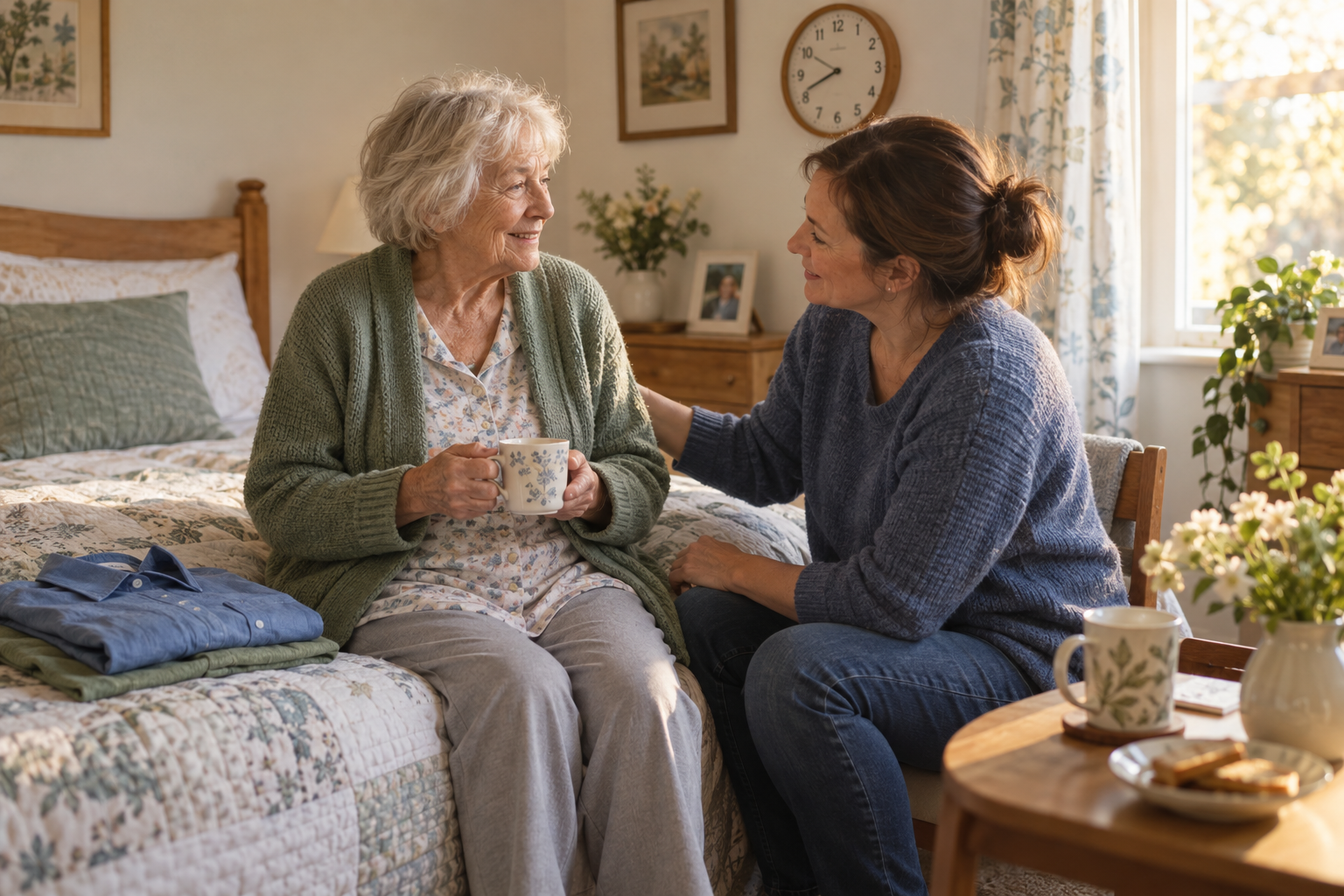
Mornings can be difficult when someone is living with dementia. Waking up in an unfamiliar-feeling room, trying to understand what time it is, choosing clothes, washing, and preparing for the day can create more confusion than we might expect.
A morning routine for someone with dementia does not need to be perfect or follow a strict schedule. Its purpose is simply to make the beginning of the day feel more familiar, predictable, and manageable.
Some mornings will still be harder than others. That does not mean the routine has failed. It only means that today may require a slower pace, fewer steps, or a different approach.
Here are seven simple ways to create calmer mornings at home.
1. Allow a Little Time to Wake Up
Try not to begin the morning with several instructions at once.
Opening the curtains, switching on a soft light, and offering a familiar greeting can be enough for the first few minutes. Give the person time to notice where they are and adjust to the new day.
Instead of saying:
“Come on, you need to get up, wash, get dressed, and eat breakfast.”
Try something smaller:
“Good morning. It’s a new day. Would you like to sit up for a moment?”
One step at a time can feel much safer than hearing the whole morning plan at once.
2. Offer Simple Orientation Without Testing
A person with dementia may not know the day, date, season, or whether it is morning or evening. Correcting them repeatedly or asking questions such as “Don’t you know what day it is?” can cause embarrassment or anxiety.
Offer the information naturally instead:
“Good morning. It’s Tuesday, and the sun is already coming out.”
A clearly displayed day-and-date clock may also provide reassurance. In our own experience, this kind of clock can reduce repeated questions and make the day easier to understand. You can read more about this in Why a Dementia Clock Can Be So Helpful.
The goal is not to test memory. It is to make orientation easier.
3. Keep Clothing Choices Small
A wardrobe full of clothes may feel overwhelming, even if every item is familiar.
Instead of asking, “What would you like to wear today?”, choose two suitable outfits and offer a simple decision:
“Would you like the blue shirt or the green one?”
Both answers should be acceptable. This allows the person to keep some independence without having to manage too many choices.
Clothes that are comfortable, easy to put on, and appropriate for the weather can also reduce frustration. More ideas can be found in Dressing With Dementia: The Gentle Two-Choices Method for Calmer Mornings.
4. Make Washing Flexible
A full shower is not necessary every morning.
For some people living with dementia, showering can feel cold, frightening, noisy, or too exposing. On a difficult day, a warm washcloth and a simple wash-up routine may be a kinder option.
Prepare everything before you begin:
- Warm water
- Soft washcloths
- A towel
- Clean clothes
- Familiar toiletries
Keep the bathroom comfortably warm and explain each step before touching the person.
If a full shower feels like too much, this gentle dementia wash-up routine offers a practical alternative. For days when showering is possible, Dementia Bathing Routine: A Calmer Way Through Shower Time includes additional ideas for reducing stress.
Cleanliness matters, but dignity and emotional safety matter too.
5. Reduce Noise and Visual Confusion
Mornings can quickly become overwhelming when the television is playing, several people are talking, drawers are open, and many objects are visible at once.
Try to keep the room calm while the person gets ready. Turn off unnecessary background noise and place only the items needed for the next step within sight.
Color can also help make everyday objects easier to notice. A contrasting towel, toothbrush cup, plate, or toilet seat may be easier to identify than an object that blends into its surroundings.
The article Colors in Dementia Care explains how thoughtful use of color may support comfort and everyday independence.
6. Keep Breakfast Familiar and Uncomplicated
Breakfast does not need to be elaborate. Familiar foods are often easier to recognize and accept.
Too many questions may make the meal more difficult. Instead of listing several possibilities, offer one familiar breakfast or a choice between two simple options.
For example:
“Would you like porridge or toast?”
Prepare as much as possible before the person comes to the table. A calm table, a familiar cup, and fewer visible packages can make the meal feel easier.
If mornings are tiring for you as the caregiver, A Gentle Kitchen Prep for Caregivers includes small ways to reduce mealtime decisions and preparation.
7. Let the Routine Bend When Necessary
Even a well-planned routine will not work in exactly the same way every day.
There may be mornings when the person does not want to get dressed, refuses breakfast, or becomes upset in the bathroom. When that happens, it can help to pause instead of pushing harder.
Try changing the order of the routine. Offer a drink first. Sit together for a few minutes. Play familiar music. Return to the difficult task later if possible.
A slower morning is not a failed morning.
Sometimes the most helpful thing we can do is adjust our expectations and meet the person where they are that day.
A Simple Morning Sequence
A calm morning routine might look like this:
- Wake up slowly and open the curtains.
- Offer simple information about the day.
- Give a choice between two outfits.
- Help with washing or showering.
- Move to a quiet, uncluttered breakfast area.
- Serve a familiar meal.
- Allow time to rest before the next activity.
You do not need to introduce every change at once. Begin with the part of the morning that currently causes the most stress.
Final Thoughts
Caring for someone with dementia often means repeating the same tasks while responding to a different mood, energy level, or ability each day.
A predictable morning routine can provide a helpful structure, but kindness and flexibility are more important than completing every step on time.
And if the morning does not go as planned, take a breath. Simplify the next step. Begin again from where you are.
For more practical ideas and emotional support, visit Caregiver Corner: A Gentle Place to Land.
This article offers general caregiving information and is not a substitute for individual medical advice. Sudden or significant changes in behavior, mobility, alertness, or daily functioning should be discussed with a qualified healthcare professional.