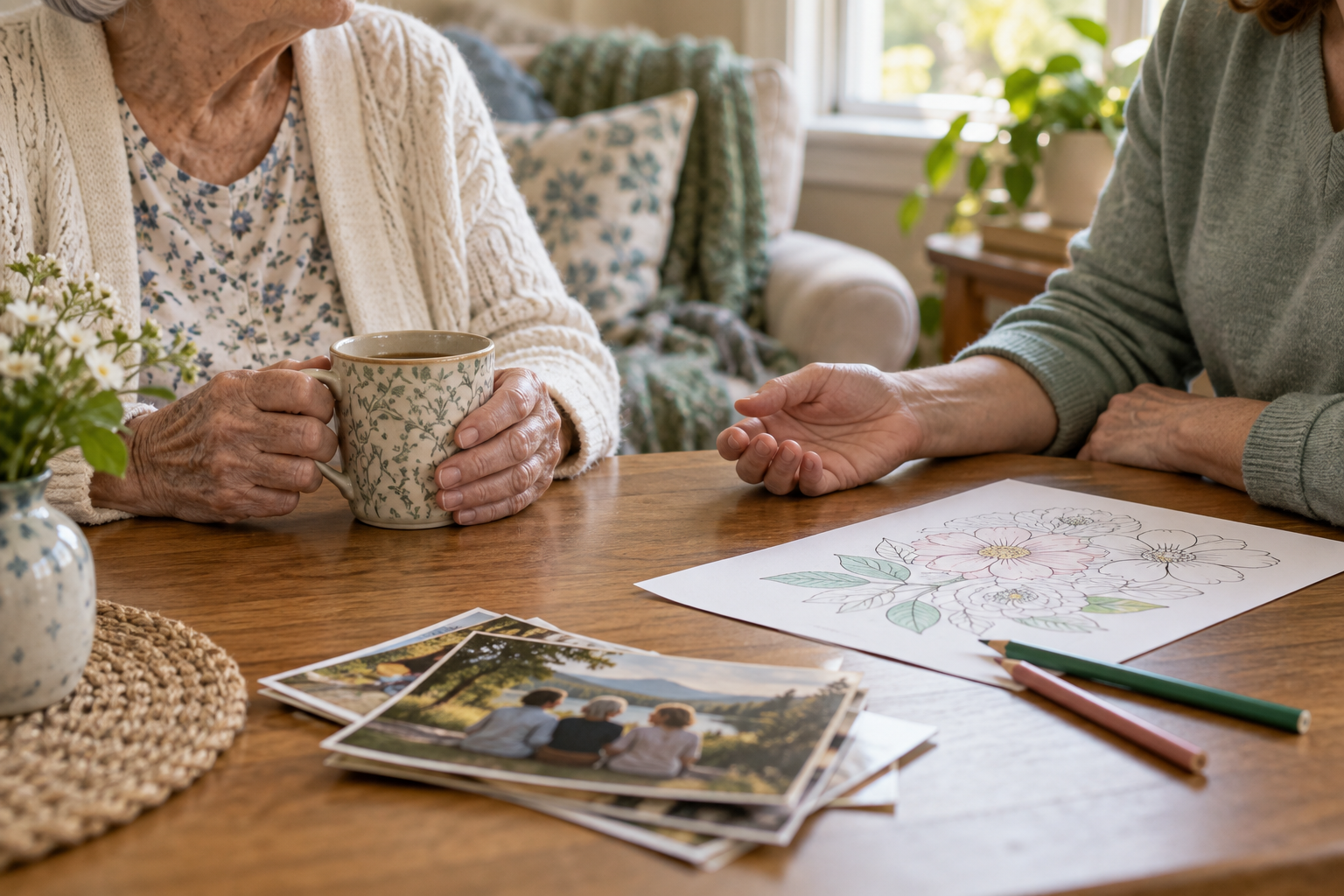
When someone with dementia refuses activities, it can be difficult to know what to do next.
You may have prepared a puzzle, a coloring page, music, or another activity you thought they would enjoy—only to hear a firm “no.” It can feel disappointing, especially when your intention was to create a calm and meaningful moment together.
But refusing an activity does not necessarily mean the person is no longer interested in anything. They may be tired, confused, uncomfortable, overwhelmed, or simply unable to understand what is being asked of them.
Instead of trying harder to persuade them, it often helps to make the moment smaller, calmer, and easier to enter.
Here are seven gentle approaches you can try.
1. Pause Before Offering the Activity Again
When someone says no, our first instinct may be to explain why the activity will be enjoyable.
“You always liked coloring.”
“It will only take a few minutes.”
“Come on, let’s just try.”
Although these words are meant kindly, they can feel like pressure. If the person is already confused or overwhelmed, more explanations may make the situation harder.
Try accepting the answer for the moment:
“That’s okay. We don’t have to do it now.”
You can leave the materials nearby and return to them later. A refusal now does not always mean a refusal for the whole day.
2. Look for What the Refusal May Be Communicating
Behavior is often a form of communication.
The person may be saying no because they are:
- Tired
- Hungry or thirsty
- In pain or physically uncomfortable
- Unable to see or hear the instructions clearly
- Worried about making a mistake
- Confused by too many materials
- Distracted by noise
- Unsure what is expected
Before changing the activity, look at the environment and the person’s comfort.
Would a drink help? Is the room too noisy? Are they sitting comfortably? Is the task too difficult to see or understand?
If refusal or withdrawal appears suddenly, happens alongside other changes, or may be connected to pain or illness, it is sensible to discuss it with a qualified healthcare professional.
3. Do Not Call It an “Activity”
Sometimes the word activity can sound like work, a test, or something the person is expected to complete.
Instead of saying:
“Would you like to do an activity?”
Try beginning with something more natural:
“I found this lovely picture.”
“Could you help me choose a color?”
“Look what I found in the drawer.”
“This song reminded me of you.”
A person may be more willing to join a shared moment than to participate in a planned activity.
The goal is connection—not completing a task.
4. Begin Without Asking Too Many Questions
Questions can create pressure, particularly when someone is worried about giving the wrong answer.
Instead of asking repeatedly whether they would like to join, sit nearby and quietly begin the activity yourself.
You might start coloring one small section of a picture, sorting a few photographs, folding napkins, or looking through a magazine.
Do not immediately hand them materials or explain what they should do. Allow them to watch.
They may become curious and join naturally. If they do not, your calm presence can still create a pleasant shared moment.
For activities that require very little preparation, see Calm Table Activities for Seniors on Low-Energy Days.
5. Offer Two Simple Choices
An open question such as “What would you like to do?” may require too many decisions.
Offer two clear options instead:
“Would you like to look at photographs or listen to music?”
“Would you prefer the flower picture or the bird picture?”
“Shall we sit by the window or at the table?”
Both choices should be acceptable. This allows the person to keep some control without having to think through many possibilities.
If choosing still feels difficult, simplify the moment further. Place one familiar item nearby and see whether it attracts attention.
A small collection of prepared materials can help caregivers avoid making too many decisions as well. The Dementia Activity Binder offers one way to keep simple pages and familiar activities ready in one place.
6. Make the Activity Easier to Enter
An activity may be refused because it looks too complicated.
A table covered with puzzle pieces, pens, papers, instructions, and craft supplies can feel overwhelming before the person even begins.
Try offering only one item at a time:
- One coloring page and two pencils
- Three photographs instead of a whole album
- One short puzzle
- A few objects to sort
- One familiar song
- One simple question
Remove unnecessary objects from the table and reduce background noise.
A full coloring page may feel like too much, while choosing one color may feel manageable. A long conversation may be difficult, while one gentle question can create a meaningful connection.
You can find ideas for simple questions in Gentle Conversation Starters for Seniors.
7. Accept That Watching Can Also Be Participation
Participation does not always look like we expect.
The person may not pick up a pencil, complete the puzzle, or answer your questions. They may simply watch, listen, smile, touch the materials, or sit beside you.
That still counts.
Listening to music without singing is participation. Watching you arrange flowers is participation. Looking at one photograph together can be enough for that day.
Some afternoons need less stimulation, not more. Seven Quiet Afternoon Activities for Low-Energy Days includes more ideas for calm moments without pressure.
What If Every Activity Is Refused?
If everything is refused, stop offering new choices for a while.
Sit together without expecting anything. Make tea, open the curtains, play familiar music softly, or simply share the room.
Trying one activity after another can become exhausting for both of you. A quiet pause may help more than another suggestion.
You can also prepare a small basket with a few familiar objects that does not require instructions. The Cozy Activity Basket is designed for exactly these low-energy moments.
On another day, try offering the same activity at a different time. Someone who refuses a puzzle in the morning may enjoy it after lunch. Timing can matter as much as the activity itself.
Keep Printable Activities Simple
If a complete activity feels like too much, one printable page may be an easier place to begin.
Choose pages with:
- Large, clear images
- Plenty of white space
- Familiar themes
- Simple instructions
- No childish language
- No expectation of a perfect result
My Little Home Rituals Etsy shop includes printable resources created for seniors, caregivers, and families. You can also read more in Printable Activities for Seniors and Caregivers.
Use printables as an invitation, not as a test. The page is only a starting point for comfort, attention, or connection.
Final Thoughts
When someone with dementia refuses activities, it is easy to feel that you have done something wrong.
You probably have not.
The person may simply need less pressure, fewer choices, a different time of day, or a quieter way to connect.
Let go of the need to finish the activity. Notice the small responses instead: a glance, a smile, a familiar word, or a few peaceful minutes together.
Some days, doing less creates the most meaningful moment.
And on the days when caregiving feels especially heavy, remember that support matters for you too. Caregiver Corner: A Gentle Place to Land was created as a quiet place for practical ideas, reassurance, and encouragement.