This post contains affiliate links. If you make a purchase through one of these links, I may earn a small commission at no extra cost to you. I only share products that I believe may be genuinely useful to caregivers and families.
Gardening does not always require a large yard, a sunny patio, or hours of physical work.
Sometimes it can be as simple as planting a few seeds, checking the water, noticing a new leaf, and wondering what might grow next.
For an older adult who spends much of the day indoors, a tiny garden can offer a gentle sense of purpose. It creates something to look at today and something to return to tomorrow.
Indoor gardening can also become a calm shared ritual for seniors and caregivers. It does not have to be done perfectly. The value is often found in the small moments along the way.
Why indoor gardening can be meaningful for seniors
Growing something is different from an activity that ends after one afternoon. A plant continues to change from day to day.
A small indoor garden can offer:
- A simple reason to check in each morning
- Familiar scents, colors, and textures
- A visible sense of progress
- Opportunities for conversation and reminiscence
- A connection to nature during colder months
- A shared activity that does not require constant talking
For someone who once kept a garden, grew vegetables, or filled a windowsill with herbs, planting may also bring back familiar memories.
Stories may appear naturally while touching a leaf or smelling a sprig of basil. There is no need to ask a long list of questions. Sometimes the plant itself begins the conversation.
Keep the activity small and manageable
A meaningful activity does not need to be complicated.
One pot, a few seeds, or a compact indoor growing system may be enough. Starting small also makes the activity easier for a tired caregiver to manage.
If traditional planting feels right, you could begin with a gentle one-pot garden activity for caregivers and seniors.
Good plants for a small indoor garden may include:
- Basil
- Mint
- Chives
- Lettuce
- Other small leafy greens
Choose something that grows relatively quickly and can later be smelled, touched, or added to a meal. Always check that the plant is safe for the person, pets, and household.
Make planting a shared moment
The older person does not need to complete every step independently.
They might choose between two plants, place a seed, hold a label, or simply watch and talk. Offering two clear options is often easier than asking an open-ended question.
For example:
“Would you like to grow basil or lettuce?”
If you would like to begin with ordinary seeds and containers, my gentle indoor seed-starting activity offers another simple approach.
Once the seeds are planted, keep the daily check short:
- Has anything appeared?
- Can we see a new leaf?
- Does the water need attention?
- Has the plant grown taller?
- Does it have a scent yet?
Taking one photograph every few days can make the progress easier to see. The pictures may also become conversation prompts later.
When soil and daily watering feel like too much
Traditional pots are lovely, but they are not always the easiest option.
Soil can spill. Watering may be forgotten or repeated. Finding enough natural light can also be difficult, especially during winter.
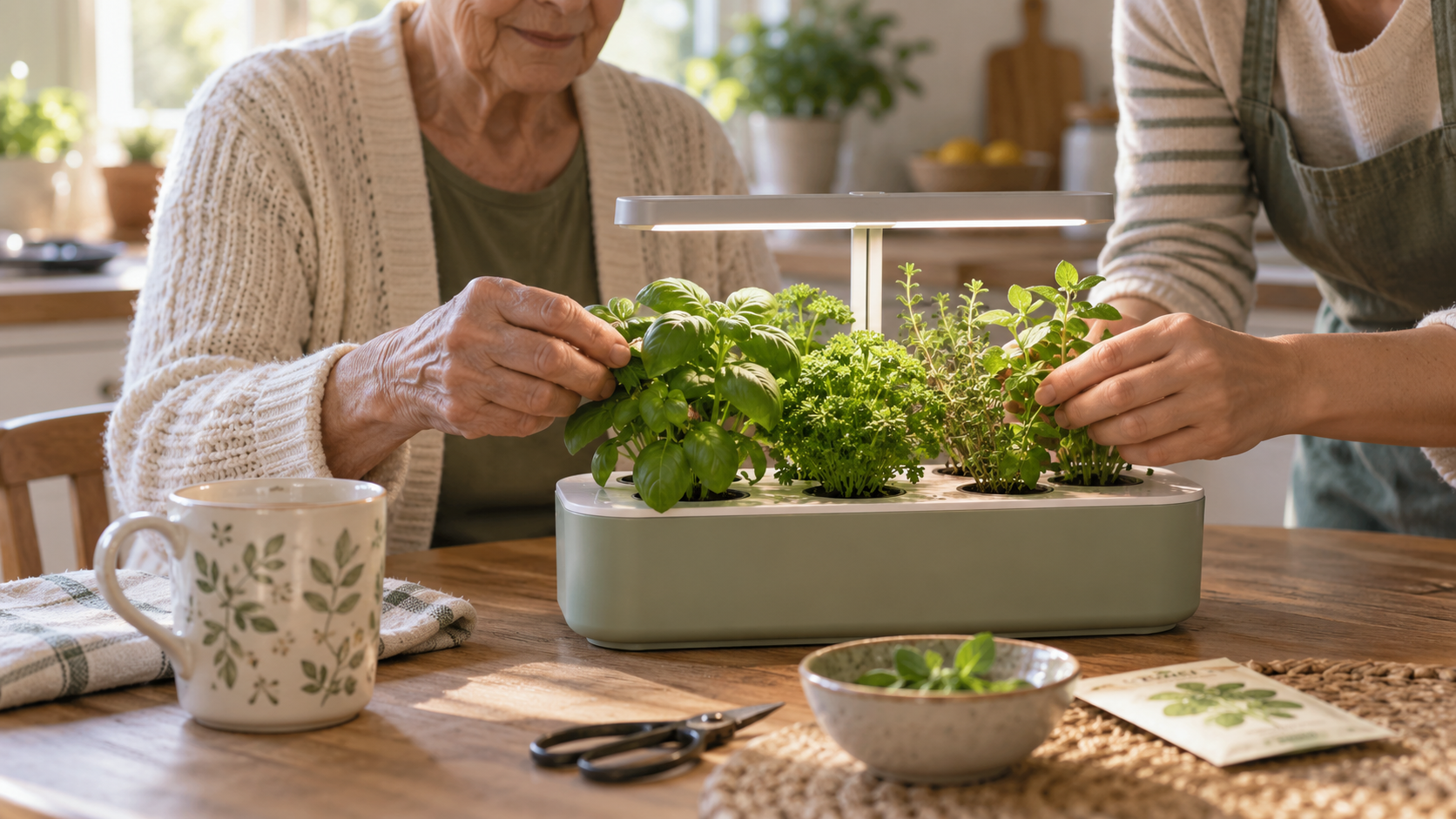
A small hydroponic garden can make the process more manageable. These systems grow plants in water instead of ordinary potting soil and include their own growing light.
One compact option is the LetPot LPH-Mini Indoor Garden.
It has five planting spaces, an adjustable growing light, two growing modes, and a 1.5-liter water tank. Its app includes a low-water reminder and allows the light schedule to be set in advance.
See the LetPot LPH-Mini Indoor Garden here.
A system like this may be useful when:
- Outdoor gardening is no longer practical
- Bending and carrying watering cans is difficult
- There is no garden or balcony
- The home receives limited natural light
- The caregiver needs a contained, low-mess setup
A caregiver or family member should still handle the initial setup, nutrients, cleaning, electrical safety, and any app controls that may feel confusing.
The older adult can then take part in the enjoyable parts: choosing, watching, smelling, harvesting, and sharing.
Adapting indoor gardening for someone with dementia
Indoor gardening can be adjusted to the person’s current abilities.
Avoid turning it into a memory test. They do not need to remember what was planted or follow every step correctly.
Instead, focus on what is happening in the moment.
You might say:
- “Look, a new leaf has appeared.”
- “Would you like to smell the basil?”
- “This reminds me of summer.”
- “Should we add this to our lunch?”
If the person does not want to participate, do not force the activity. The garden can remain nearby as something pleasant to notice. Curiosity may return naturally on another day.
For more quiet ideas, you may also like these calm table activities for seniors on low-energy days.
Create a simple weekly garden ritual
The garden can become part of a gentle weekly rhythm.
For example:
- Check for new growth
- Take a photograph
- Smell or touch the leaves
- Harvest a small amount for a meal
- Choose what to plant next
A few herbs can be sprinkled over potatoes, added to soup, mixed into a salad, or placed on a sandwich.
The harvest does not need to be large. Even two or three leaves can give the activity a natural sense of completion.
If herbs are the main interest, you may also enjoy my guide to creating a tiny indoor herb garden for caregivers.
Is a hydroponic garden right for everyone?
Not necessarily.
A simple pot may be better for someone who enjoys touching soil and prefers familiar gardening methods. A hydroponic system still requires electricity, nutrients, occasional cleaning, and some initial setup.
Before choosing one, consider:
- Whether there is a safe and stable place for it
- Who will manage the technical setup
- Whether the growing light may feel too bright
- Whether the older person enjoys plants
- Whether replacement supplies are easy to obtain
- Whether the caregiver can manage the basic maintenance
The best activity is not the most advanced one. It is the one that fits comfortably into everyday life.
For a small home, an apartment, or the darker months of the year, the LetPot LPH-Mini may be worth considering because it provides its own light and keeps the growing area contained.
A small garden can still hold a lot
Indoor gardening is not only about growing food.
It can be about noticing change, caring for something small, sharing a memory, or having one peaceful activity to return to during the week.
There may be days when the person wants to help with every step. On other days, they may only look at the leaves for a moment.
Both experiences are valuable.
A few seeds, a little water, and one new green leaf can create a quiet connection between the person receiving care, the caregiver beside them, and the natural world still growing nearby.