This post contains Amazon affiliate links. As an Amazon Associate, I may earn from qualifying purchases at no extra cost to you.
A dementia activity binder can make it easier to find a calm, familiar activity whenever you need one.
Some days, finding a suitable activity for someone living with dementia can feel harder than the activity itself.
You may have coloring pages in one drawer, old photographs somewhere else, and a few printed puzzles that you cannot find when you need them. A dementia activity binder brings these simple resources together in one familiar place.
It does not need to be complicated or perfectly organized. The goal is to create a small collection of calm, familiar activities that can be used whenever you need an idea for a quiet afternoon, a family visit, or a low-energy day.
What Is a Dementia Activity Binder?
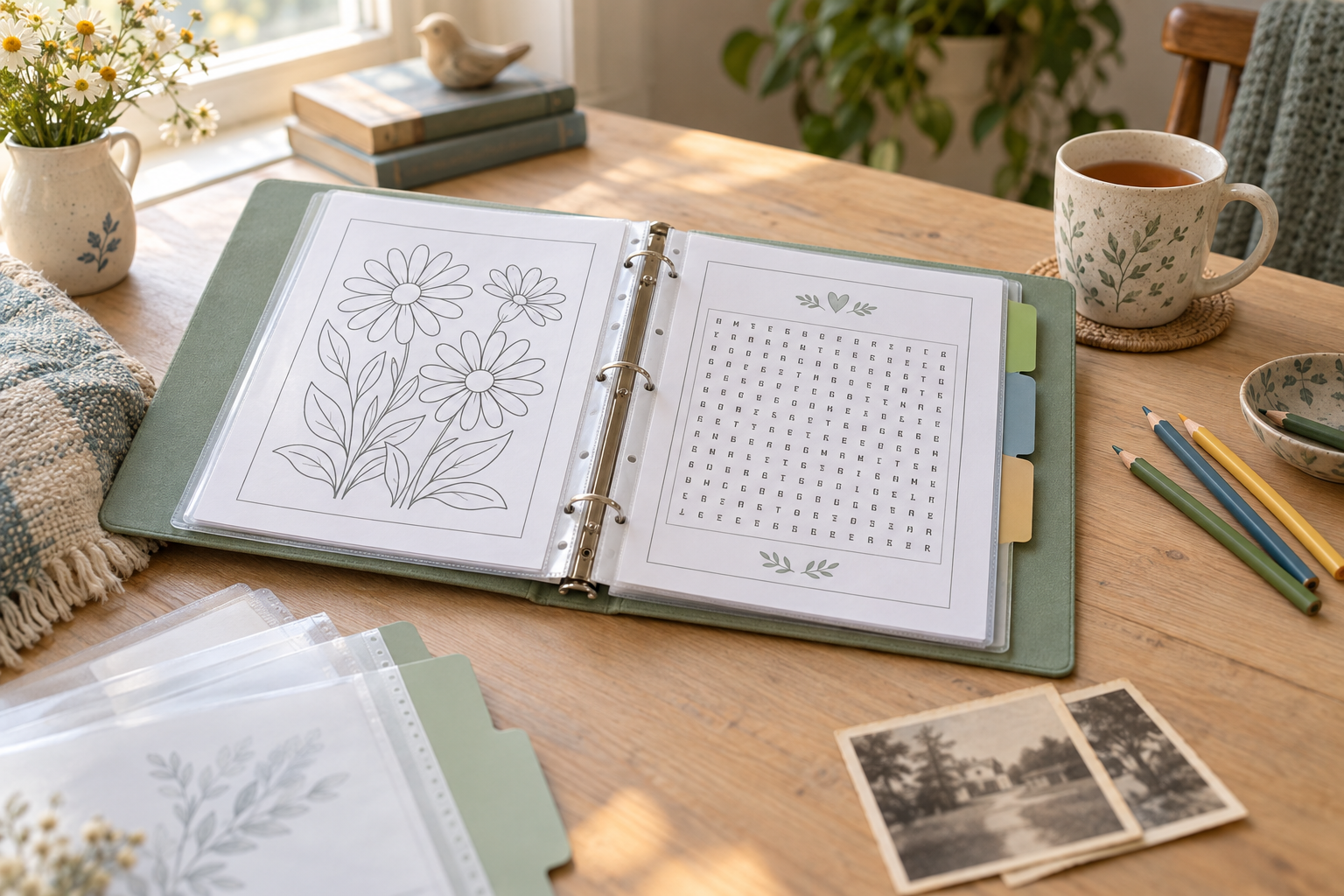
A dementia activity binder is a folder filled with simple, printable pages and familiar materials.
Depending on the person’s interests and abilities, it might include:
- Large-print word searches
- Simple coloring pages
- Familiar songs or poems
- Conversation prompts
- Seasonal pictures
- Matching activities
- Family photographs
- Easy recipes
- Pages about favorite hobbies
- Short stories or memory prompts
The binder is not a test and there is no correct way to use it. A page may lead to a conversation, a memory, a few minutes of coloring, or simply a quiet moment together.
Start With a Simple Binder
You do not need special equipment. A basic A4 ring binder is usually enough.
Choose one that is easy to open and not too heavy. A binder with a clear front pocket can be helpful because you can add a familiar photograph, the person’s name, or a simple title such as “My Activity Book.”
Suggested product:
👉 A4 ring binder with an easy-to-open mechanism
Start with a small number of pages. A thick, overfilled folder may feel overwhelming, while a simple binder with 10–20 carefully selected pages is easier to explore.
You can always add more later.
Use Protective Sleeves for Frequently Used Pages
Clear plastic sleeves protect printable pages from spills and make the binder easier to update.
They may also allow some activity pages to be reused with suitable wipe-clean pens. Before doing this, test the pen on a small area of the sleeve and make sure it can be removed easily.
Suggested product:
Avoid filling every sleeve with several pages. One clear activity per page keeps the binder calmer and easier to understand.
What to Put in a Dementia Activity Binder
The best activities are usually connected to the person’s past interests, daily routines, and current abilities.
1. Large-Print Word Searches
Word searches can provide a familiar, low-pressure table activity. Choose large print, simple word lists, and themes the person recognizes.
They can also lead to unexpected conversations. A puzzle about gardens, for example, may bring back memories of favorite flowers or vegetables.
You can read more in A Gentle Way to Spend Time Together: Word Searches for Seniors.
2. Simple Coloring Pages
Choose clear pictures with larger spaces and not too many small details. Flowers, birds, household objects, and seasonal scenes can work well.
Coloring does not have to be completed. The person may color only one part of the picture or prefer talking about what they see.
3. Conversation Prompts
Add a few pages with gentle questions that do not depend on remembering exact dates or names.
For example:
- What was your favorite season?
- Did you enjoy baking?
- What music did you like?
- Did your family have a garden?
- What made a home feel cozy to you?
More ideas are available in Gentle Conversation Starters for Seniors.
4. Familiar Songs, Poems, and Sayings
Print the words of a familiar public-domain poem, traditional song, prayer, or saying. Reading or singing together may feel easier than answering direct questions.
Select material that has personal meaning for the individual rather than adding pages simply because they are generally popular.
5. Seasonal Activities
Create a small section for the current season. It might include autumn leaves, Christmas memories, spring flowers, Easter pictures, or simple questions about seasonal traditions.
Change these pages throughout the year so the binder remains connected to everyday life.
6. Family and Personal Pages
Copies of family photographs can make the binder feel more personal. Add simple labels if appropriate, but do not use the pages to test whether the person remembers everyone correctly.
You might also include pictures of:
- A former home
- A beloved pet
- A familiar town
- A favorite meal
- A past hobby
- Places the person enjoyed visiting
The purpose is connection, not correction.
Organize the Binder Into Small Sections
Simple dividers can make the binder easier to use. Possible sections include:
- Puzzles
- Coloring
- Conversation
- Music and poems
- Seasons
- Family memories
You do not need all of these sections. Choose only those that suit the person.
If planning activities already feels exhausting, begin with three pages rather than an entire binder. A word search, a familiar photograph, and one coloring page are enough to get started.
For more low-pressure ideas, see Calm Table Activities for Seniors on Low-Energy Days and The Cozy Activity Basket.
How to Use the Binder Without Pressure
Offer the binder as an invitation, not an obligation.
Instead of saying:
“You need to do an activity now.”
Try:
“I found a few pictures we could look at together.”
Sit nearby and allow plenty of time. If the person is not interested, close the binder and try again another day.
Some days a complete activity may be enjoyable. On other days, simply turning the pages together may be enough.
Finding Printable Activities
You can create your own pages using photographs, simple questions, and familiar themes. Ready-to-print resources can also save time when you need something quickly.
My Little Home Rituals Etsy shop includes digital activities and supportive resources created for seniors, caregivers, and families.
You can also visit Printable Activities for Seniors and Caregivers to learn more about the growing collection.
Final Thoughts
A dementia activity binder does not need to keep someone busy for hours.
Its value may be much smaller and more meaningful: ten quiet minutes, a familiar song, a shared memory, or one less decision for a tired caregiver.
Begin with a few pages. Notice what the person enjoys. Remove anything that causes frustration and slowly build a collection that feels familiar, respectful, and personal.
The best activity binder is not the most beautiful or complete one. It is the one that helps you spend a little more peaceful time together.