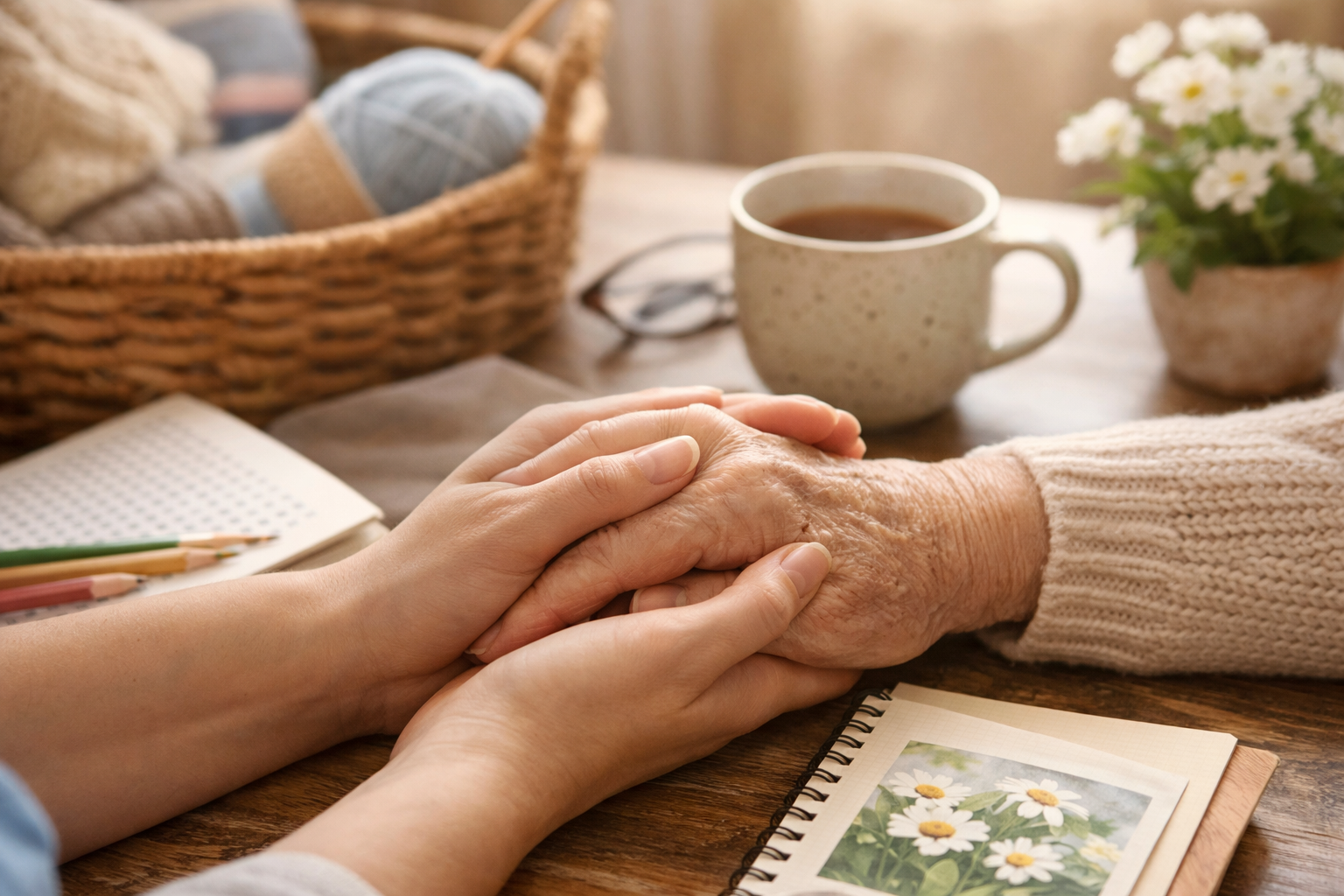
Small steps, less pressure, and dignity-first routines that actually work on real-life days.
Some mornings go smoothly. And some mornings feel like a tangle of small decisions that suddenly become too much.
If you’re caring for someone with dementia, getting dressed can shift from “simple” to surprisingly stressful—fast. Buttons can feel confusing. Fabrics can feel irritating. Choices can feel overwhelming. And when a person doesn’t feel safe or understood, resistance can become their only way to communicate.
I’m writing this as someone personally affected by dementia in my own family, and also as a caregiver working in a nursing home. I’ve seen how quickly dressing can turn into a power struggle—and how much calmer it becomes when we make the routine smaller, gentler, and more predictable.
Why dressing can feel hard (and it’s not stubbornness)
Dementia can change how a person experiences clothing and routine. Dressing may feel difficult because of:
- too many choices (decision overload)
- sensory discomfort (scratchy seams, tight waistbands, cold fabric)
- confusion about steps (what comes first? which side is front?)
- loss of control (being “told” what to do can feel threatening)
- temperature misjudgment (feeling cold/hot differently than before)
The goal isn’t perfect outfits. The goal is comfort, dignity, and less stress for both of you.
The “Two Choices” method (the simplest tool I come back to)
When dressing feels tense, try this:
Offer two options—only two.
Not a closet full of decisions. Just two calm, gentle choices.
Examples:
- “Would you like the blue sweater or the soft beige one?”
- “Do you want the striped shirt or the plain shirt?”
- “Would you like pants or a comfortable skirt today?”
Keep your voice soft and unhurried. Pause. Let them take time.
If they can’t choose, you can lovingly decide:
“Okay. I’ll choose the soft one today.”
(This reduces pressure while still preserving a feeling of choice.)
Set the stage before you begin (a calmer environment helps)
Before dressing, try to make the space feel safer:
- warm the room slightly (or have a cozy cardigan ready)
- reduce noise (TV off, calmer music on)
- keep lighting gentle and even
- lay clothing out in the order it’s needed
Color and contrast can help too—especially if items blend together visually.
A gentle step-by-step routine (less thinking, more flowing)
Try this “small steps” order:
- Start with one item only (don’t show everything at once)
- Hand them the item instead of pointing to it
- Use simple cues: “Arms in,” “Now pull down,” “All done.”
- If they struggle, mirror the movement (do it on yourself slowly)
- Celebrate tiny progress: “Perfect. That’s it.”
If something triggers frustration, switch to an easier item and return later.
Make dressing easier with “quiet clothing”
In caregiving, I’ve learned that the best clothing on hard days is the clothing that disappears—no fuss, no irritation.
Look for:
- soft, familiar fabrics
- stretchy waistbands
- front-opening tops (or wide neck openings)
- easy shoes (Velcro, slip-ons)
- layers (so temperature changes are easier)
Avoid when possible:
- tight collars
- complicated buttons
- scratchy tags/seams
- outfits that require many steps
When they refuse: what to do (without power struggles)
Refusal usually means: “I don’t feel safe / I don’t understand / I’m uncomfortable.”
Try:
- pause and breathe (your calm helps their nervous system)
- validate: “This feels annoying. I understand.”
- offer a reset: “Let’s sit for a minute.”
- try again with one item, or switch to a softer option
- consider timing: sometimes later is better
And if it’s truly not possible that day: it’s okay.
Comfort first. Dignity always.
A tiny “cozy basket” trick for dressing days
Sometimes it helps to pair dressing with something comforting nearby:
- a warm drink
- a soft blanket on the chair
- a familiar scent (hand cream)
- a simple calming activity while you prepare clothing
Words that help (gentle phrases to try)
- “We’ll do this slowly.”
- “You’re safe.”
- “I’m right here.”
- “Let’s do one small step.”
- “Thank you. You’re doing great.”
If conversation helps during dressing, you might also like:
Closing
If dressing has been a daily struggle in your home, I hope this gives you a softer path to try. The smallest shifts—two choices, fewer steps, gentler words—can bring surprising relief.
And if today was hard: you’re not failing. You’re caring in a situation that asks a lot of the heart.
For more support and caregiver-friendly ideas, you can start here: