There are days when you want to spend time together… but you don’t have the energy to plan an “activity.”
And sometimes the person you care for doesn’t either.
That’s where a cozy activity basket helps.
It’s a simple, ready-to-grab set of comforting, low-pressure activities that makes visits smoother, reduces decision fatigue, and creates more “we’re okay” moments — even on tired days.
In this post, I’ll show you exactly what to put in one (large-print friendly!), how to use it, and a few easy theme ideas you can rotate through the seasons.
What is an “activity basket” (and why it works)
An activity basket is just what it sounds like: a small basket (or tray, tote, folder — anything works) stocked with a few ready-to-go items.
Why it works so well:
- Less decision fatigue: no “What should we do?” spiral.
- Gentle structure: activities are familiar and predictable.
- Low-pressure connection: side-by-side time counts, even without big conversation.
- Easy reset: you can pull it out for 10–20 minutes and feel like the day has a shape again.
If you want an easy “starter activity” that reliably opens up memories and stories, word searches are surprisingly good for that.
Anchor idea: “A Gentle Way to Spend Time Together: Word Searches for Seniors (and the Stories They Unlock)”
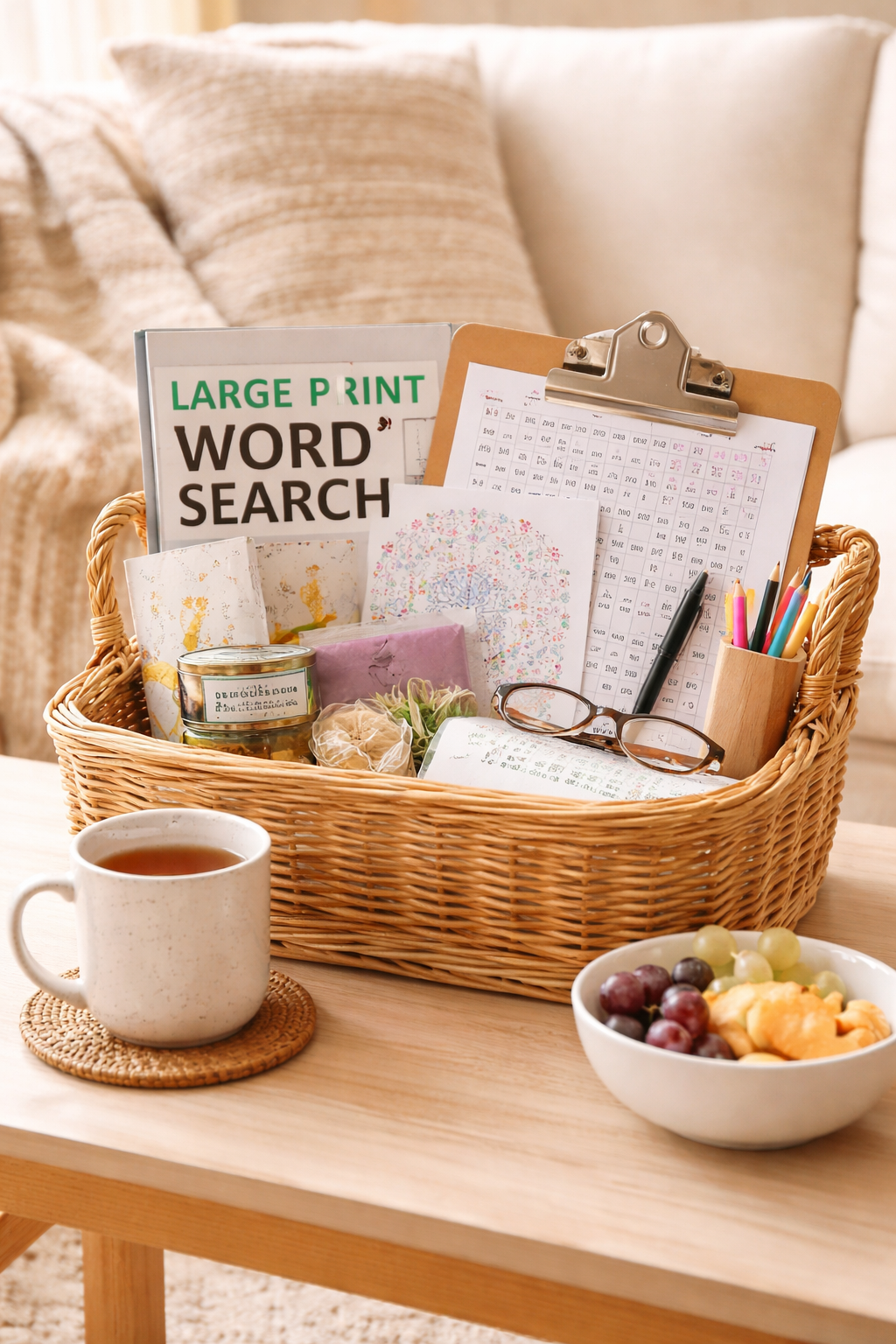
What to put in a cozy activity basket (simple checklist)
Think large print, low mess, low stress, familiar.
The basics
- Large-print word searches (with an answer key)
- A large-print word list (if your puzzles use one)
- Coloring pages (simple, bold lines)
- A clipboard or hard writing surface
- 2–3 pens or markers (dark ink; easy grip if possible)
- Reading glasses (optional, if helpful)
- A small pouch for finished pages
Comfort extras (optional, but lovely)
- A cozy tea bag or cocoa sachet
- A small snack (soft, easy-to-eat)
- A comforting scent (lavender sachet) only if tolerated
- A soft timer (optional) to keep things “short and sweet”
Pro tip: keep it small
This works best when it’s not overwhelming. Start with 3 activity types only.
Three ready-to-go basket themes (choose one to start)
You don’t need a “perfect” basket. Pick one theme that matches your person’s mood and abilities.
1) The Cozy Quiet Basket (for calm, low-stimulation days)
Best for: tired afternoons, low energy, “quiet company”
Include:
- 2–4 coloring pages (large print, bold lines)
- 1–2 gentle word searches
- a mug + tea sachet (optional)
How to use it:
- Sit side-by-side
- Put on soft music (or none)
- Color for 5–10 minutes, then switch to a word search if they want
If you’d like a couple of quick, printable pages to use immediately, you can find a small collection here:
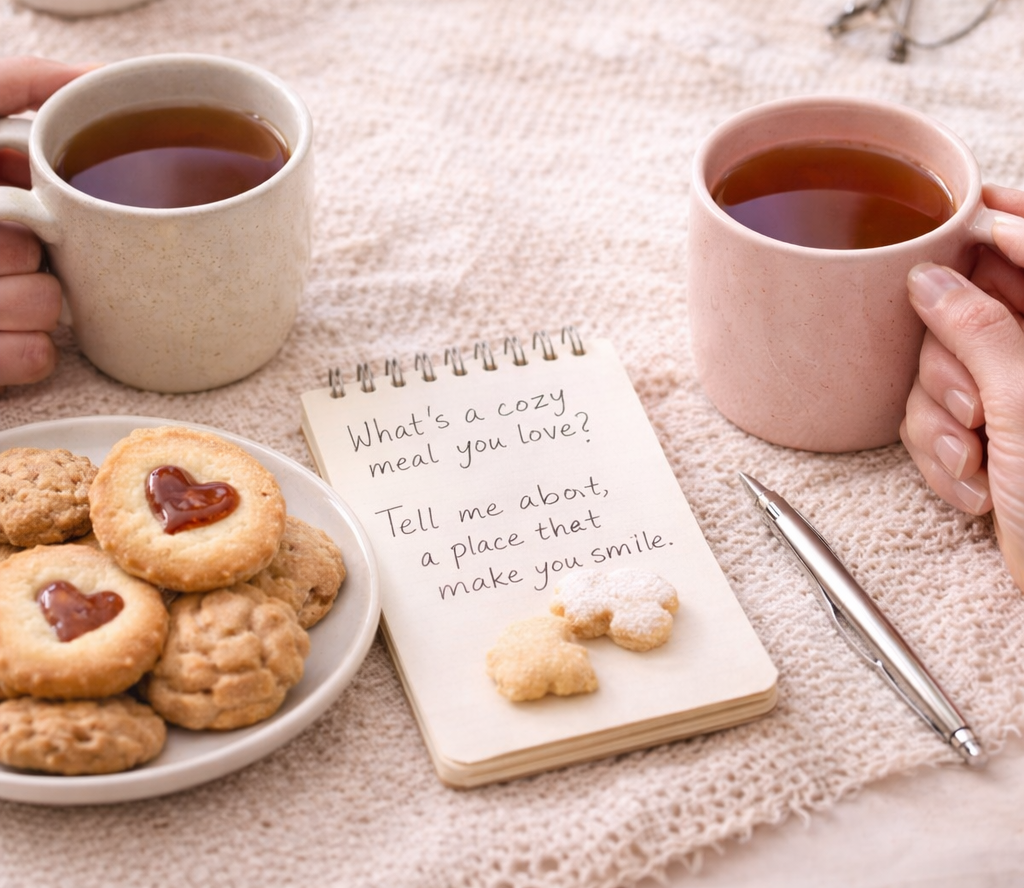
2) The Memory & Stories Basket (for connection without pressure)
Best for: visits, family time, “I want to talk but don’t know how”
Include:
- A large-print word search (simple theme: pets, seasons, foods)
- A short list of gentle prompts
- A notepad (for writing down stories or names that come up)
A helpful trick:
Let the puzzle do the talking.
Even one word (“dog,” “garden,” “valentine”) can trigger a memory.
If conversation feels hard, these gentle prompts can help a lot.
Anchor idea: “Gentle Conversation Starters for Seniors: Small Questions, Big Connection”
3) The Kitchen Comfort Basket (for familiar routines)
Best for: food memories, cozy chatting, “hands busy, mind calm”
Include:
- 2–3 large-print recipe cards
- A simple “memory menu” prompt list
(e.g., “favorite soup,” “Sunday dinner,” “first thing you learned to cook”)
You can also pair this with a “tired day” dinner plan (so you’re not reinventing the wheel every week).
Anchor idea: “Caregiver Corner: 10 Easy Large-Print Recipes for Gentle Kitchen Days”
A 15-minute “reset routine” for tired days
On hard days, you don’t need a big plan. You need a gentle reset.
Try this simple routine:
- Set the scene (2 minutes)
Bring the basket to the table. Put out one page only. Make it easy to start. - Choose ONE thing (1 minute)
You pick, kindly.
“Want to do this one together?” - Do it side-by-side (8–10 minutes)
No pressure to finish. The goal is calm, not performance. - End on a good note (2 minutes)
“Let’s stop here — this was nice.”
If you repeat this often, the basket becomes a cue for comfort and connection.
Optional: a ready-made printable kit (if you want zero prep)
If you like the idea of the activity basket but don’t want to assemble pages and themes every time, a ready-to-print set can be helpful.
Optional: I keep a few large-print, senior-friendly printable bundles in my Etsy shop — designed for calm routines and gentle caregiver days.
(If you prefer, you can also start by using the free printables first and see what your person enjoys most.)
Tips to make activities more dementia-friendly (and less frustrating)
Every person is different, but these tend to help:
- Go larger: large print + bold lines reduce strain
- Shorter is better: choose 5–10 minute activities
- Offer choices carefully: “This or this?” (not 10 options)
- Skip correction: it’s okay if the puzzle isn’t finished
- Celebrate effort: “That was a good one.”
If your loved one becomes irritated quickly, try coloring or sorting (very gentle) before word searches.
Frequently asked questions
“What if they don’t want to do anything?”
That’s normal. Keep the basket visible but low-pressure.
Sometimes the best entry point is:
“Can you help me find just one word?”
“What if their hands shake or grip is weak?”
Use thicker pens/markers and a clipboard.
You can also do “pointing” instead: you read the word, they point to the letters.
“How many pages should I keep in the basket?”
A small rotation is perfect:
- 5–10 word searches
- 6–10 coloring pages
- a few recipe cards or prompts
Refresh monthly or seasonally.
A gentle next step
If you want to make this easy, do this today:
- Pick a basket (or folder)
- Print two pages (one word search + one coloring page)
- Add a pen + clipboard
- Put it somewhere you can grab in 10 seconds
That’s it. You’ve built a calm option for the next hard moment.
➡️ Freebies:
➡️ More Caregiver Corner posts:
Disclosure
This post may include links to free resources and/or my own printable products. Some posts on this site may also contain affiliate links, which means I may earn a small commission at no extra cost to you.