Today is one of those days when the cold feels personal. ❄️ The kind of cold that makes you walk past the window, sigh dramatically, and immediately start looking for something warm—preferably in a mug.
So I did what I always do on days like this: I went to the pantry shelves and pulled out my little jars of home-dried tea ingredients. It’s one of my favorite winter rituals—like a tiny reminder that summer still exists… somewhere.
What we brewed today
A cozy mix of whatever felt right in the moment:
Rosehip (tart, bright, and vitamin-y)
Chamomile (soft, calming, basically a warm blanket)
Mint (fresh and comforting)
Sloe / blackthorn berries (deep, slightly wild, and very “winter woodland”)
How we make it (the lazy, happy way)
I’m not precious about tea. I’m here for comfort.
My simple method:
Add a spoonful (or two) of each ingredient to a teapot or heatproof jar
Pour over hot water
Let it steep until it smells like you deserve peace
Strain, pour, and pretend you are in a cozy novel
Optional but recommended: honey.
Why I love drying my own tea ingredients
It feels like a small act of seasonal magic:
you collect little gifts from summer
dry them slowly
and in winter you get to open a jar and taste a memory
Also, it makes me feel wildly prepared. Even if the rest of my life is… less organized. 😄
Coming soon
If you’d like, I can write a more detailed post later about:
how I dry and store tea ingredients
what blends I make most often
and which ones are my “winter essentials”
For now, I’m just grateful for warm mugs, quiet afternoons, and the fact that my pantry shelves are basically a tiny tea library.
Your turn
What’s your go-to winter tea? And do you like it floral, fruity, minty… or “strong enough to restart my soul”? ☕️😄
Today I reached for my favorite seasoning blend in the kitchen… and the jar was empty. You know that moment—where your brain goes: “No problem!” but your soul goes: “Tragedy.” 😄
So I did what I always do: I marched to the pantry like a tiny kitchen detective and pulled out my stash of home-dried herbs and vegetables. Because summer and autumn did not dry themselves for nothing.
The idea: one jar = instant flavor
This is my “sprinkle-on-everything” blend. It’s:
delicious
additive-free
and honestly… it tastes like my own garden + my own effort, which is the best seasoning of all.
And the best part? I can mix a new batch anytime.
What goes into my homemade seasoning blend
It changes a little every time (because I use what I have), but my usual favorites are:
🌿 Dried herbs
Marjoram
Oregano
Basil
Parsley
🥕🧄 Dried vegetables (the secret upgrade)
Carrot
Beetroot
Horseradish …and honestly, sometimes “whatever else I dried and forgot about,” which keeps life exciting.
How I mix it (the cozy, no-rules method)
I scoop a bit of each dried ingredient into a bowl
Mix it together
Taste (carefully—horseradish is bold 😄)
Pour into a clean jar
Label it, because Future Me deserves nice things
That’s it. Pantry magic.
How we use it
This blend is basically my kitchen shortcut:
roasted vegetables
soups and stews
scrambled eggs
potatoes
quick buttered noodles
anything that needs “one shake of flavor”
Why I love it (besides the taste)
Because it’s:
homemade
clean
zero-waste-ish
and it makes me feel like I’m winning at winter.
Also: it’s incredibly satisfying to say, “Oh this? I made it.” 😌
This year’s plan: even richer blends
I’m definitely doing this again this year—and I want it to be even better. My goal is to dry more variety so the blend gets deeper, richer, and more interesting.
If you have a favorite ingredient that belongs in a seasoning mix, tell me—I’m always collecting ideas like a dragon collects treasure.
Your turn
Do you make your own spice blends? If yes—what’s your secret ingredient? 👀✨
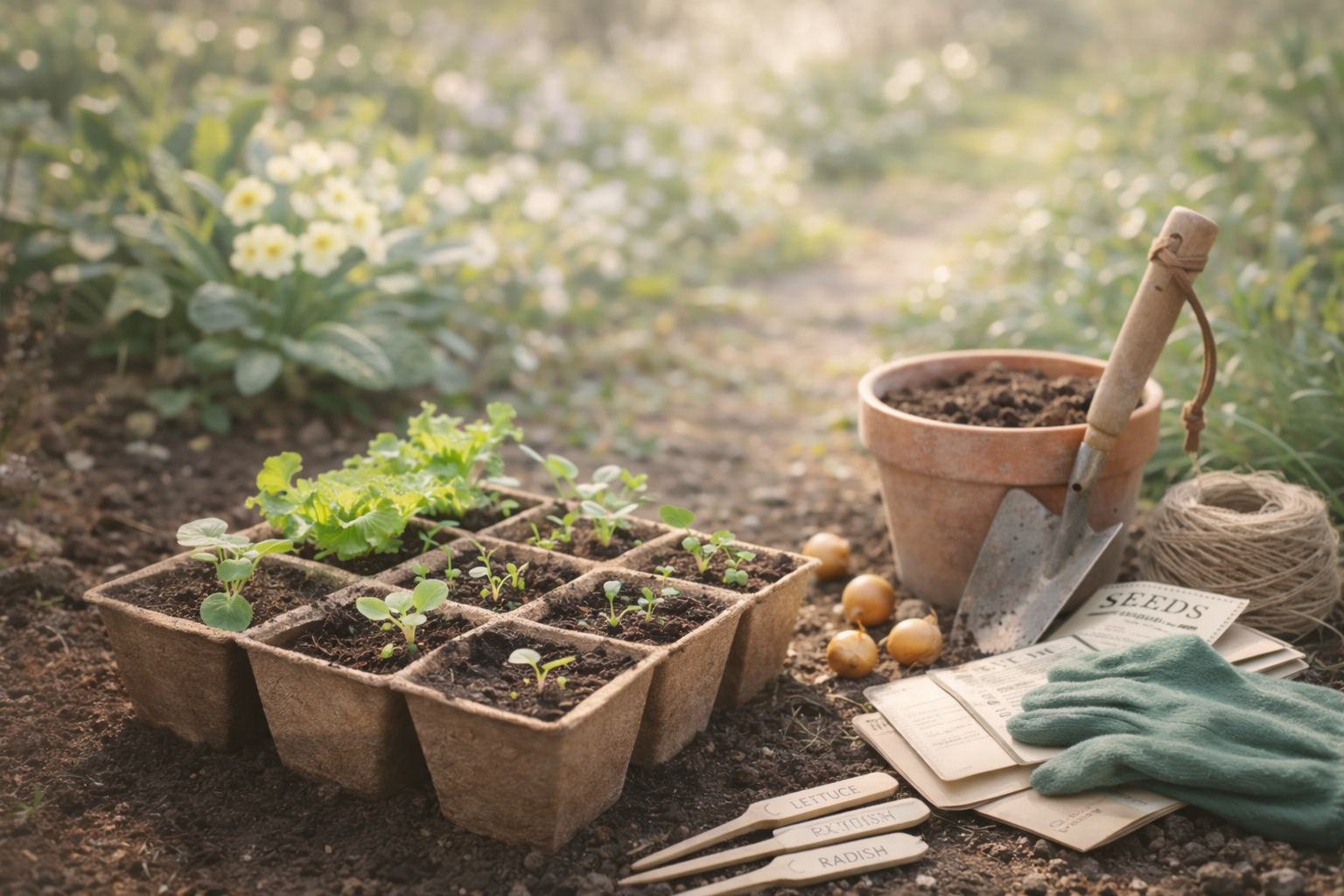
Ah, the winter blues. The time of year when all the garden tools are tucked away, the flowers are nowhere to be seen, and the only greenery in sight is that one houseplant you miraculously kept alive all winter. 🌿
But listen — winter may be here, but garden prep mode has officially begun. Because what else do you do when it’s too cold to plant anything? You shop for garden supplies, of course! 😄
Honestly, I’m not technically gardening yet… but I am ordering things that make me feel like I’ve already started. 🤓
Let’s be real: I might not be planting seeds just yet, but scrolling through these made me feel very prepared… and very excited about spring.
Pro tip: Even if your garden is buried under snow right now, prepping early means you’ll be ahead of the game when it finally warms up. And honestly? Those colorful labels already make me feel like a pro gardener. 👩🌾
Winter Mood Checklist
✔️ Garden tools stored ✔️ Warm tea in hand ✔️ Browsed Temu garden finds 17 times ✔️ Created imaginary spring garden in my head
If you’re also on the pre‑spring shopping train, check out those links — why not treat yourself to a little garden inspo now when everything else is just brown and snow? ❄️🌷
And hey — if you’ve found fun or quirky garden tools you love, drop them in the comments! We need all the warm‑weather inspiration we can get.
Happy (future) gardening! 🌷
Ready to get started? 🌱
Click the button below to shop my favorite gardening finds at Temu:
Outside, everything is buried under snow. Inside, our pantry had a few suspiciously empty corners whispering, “You call this winter preparedness?”
So my husband and I decided it was time to do the most logical thing a couple can do in mid-winter: make sausage.
We started with 5 kg of pork loin, added fatback (because flavor is not optional), stuffed it, and then cold-smoked it. Honestly? It felt like one of those cozy, old-school home rituals that makes winter feel less… wintery.
By the time the garden wakes up—when the spring onions, radishes, and salad greens start showing off—we’ll be slicing our own sausage. Future-us is going to be very pleased.
The setup: meat, fat, and good intentions
This batch was simple, rustic, and deeply satisfying.
We used:
Pork loin (5 kg)
Fatback (to keep everything juicy)
Natural casings (we bought ours from a local butcher shop)
It was on sale, arrived quickly, and made the process feel surprisingly smooth—especially once we found our rhythm: one person guiding the casing, the other cranking like they’re auditioning for a medieval bakery.
What I appreciated most:
Sturdy stainless steel build (feels solid, not flimsy)
Vertical design (doesn’t take over the whole counter)
Multiple tubes (handy for different casing sizes)
Cleaning wasn’t a nightmare (a true love language)
A few things we learned (so you don’t have to learn them the hard way)
1) Don’t skip the fat. Pork loin is lean. Fatback makes the texture tender and the slices actually satisfying.
2) Keep everything cold. Cold meat is easier to work with and stuffs better. Warm meat turns into chaos.
3) Go slow at the start. Once the casing fills evenly and you find your pace, it becomes oddly calming.
4) Make extra. Because you will “taste-test.” And then you’ll taste-test again. For quality control. Obviously.
Note: Cold smoking does not cook sausage. For cold-smoked/dried sausage, curing salt and proper drying conditions matter—always follow trusted local food-safety guidance for your region and setup.
Ingredients (per 1 kg / 1000 g meat + fat)
Cure #1 (pink curing salt): 2.5 g
Salt (non-iodized): 14 g
Sweet paprika: 10 g
Black pepper: 2 g
Garlic: 10 g fresh, minced (or 2 g garlic powder)
Marjoram (optional): 1 g
Caraway (optional): 0.5 g
Ice-cold water: 30–50 ml
Casings: Natural casings from a local butcher.
Method (short version)
Chill meat + tools
Grind (medium grind works great)
Mix spices + cold water until tacky/sticky (“bind”)
Rest 8–24 hours in the fridge (recommended)
Stuff into casings, twist links
Dry 12–24 hours until casings feel dry
Cold smoke below 25°C / 77°F in gentle sessions
Dry/age until firmer (time varies by thickness and environment)
Cold smoking = winter happiness (quiet version)
Hot-smoke days are loud and celebratory. Cold-smoke days are more… patient. You check on things, you wait, you pretend you’re very calm and not obsessed with whether the smoke is “just right.”
And then you peek again five minutes later.
Now we’ve got homemade sausage tucked away, ready for quick meals, soups, breakfasts, and those early spring days when the garden starts producing again.
We took the Christmas decorations down… and the house felt weirdly empty. So naturally, we decided to start a superhot chili mission. Because that’s what stable people do in January. 🌶️
This year’s spicy garden dare: Trinidad Moruga Scorpion — one of those peppers that caused a serious stir back in 2012, when it was measured at over 2 million Scoville units in testing.
I ordered the seeds here: Trinidad Scorpion Moruga seeds. Disclosure: This post contains affiliate links. If you buy through them, we may earn a small commission at no extra cost to you.
If you’ve grown a superhot before, please send tips (and emotional support). Next up: starting them indoors without turning the windowsill into a tiny sauna.
After we packed away the Christmas decorations, the house felt… suspiciously empty. So obviously, we did the only reasonable thing: we started chili season.
If you’re also craving a little green life in the middle of winter, this is your sign.
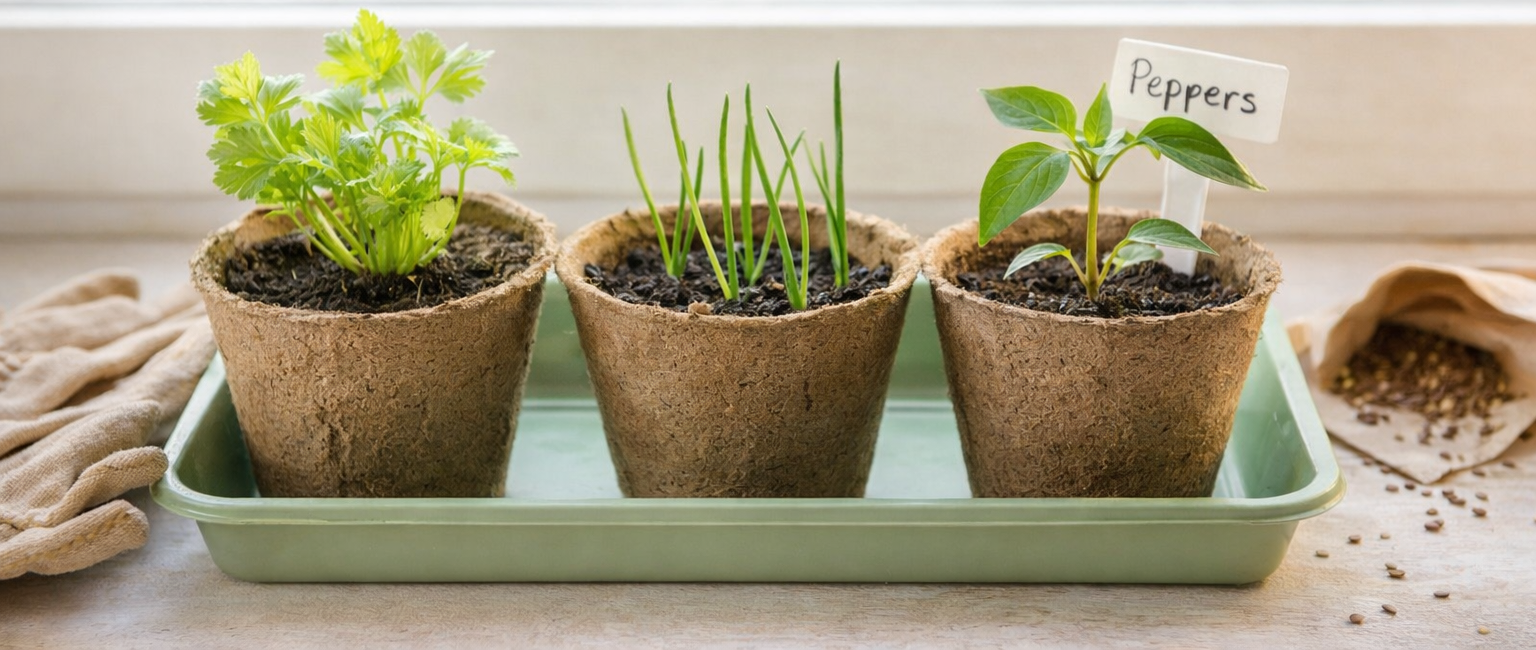
What we’re starting (and why chili is always first): Chili peppers are the perfect “tiny victory” plant:
they germinate like little drama queens (but it’s worth it)
they love warmth
and they turn into summer flavor bombs
What you’ll need (simple version):
chili seeds
seed-starting mix (light + fluffy)
small pots or a seed tray
labels (future-you will thank you)
a warm spot (or heat mat if your home runs cool)
Where we got our seeds: We ordered ours from chili-shop24 (DE) because they have great varieties and clear descriptions. 👉 Disclosure: This post contains affiliate links. If you buy through them, we may earn a small commission at no extra cost to you.
Our cozy step-by-step (no perfection required):
Pre-moisten the soil (damp like a wrung-out sponge)
Plant 2 seeds per cell (insurance policy)
Label immediately (do not trust your memory)
Keep warm + humid (cover helps)
Wait… and then suddenly: tiny green miracles
Real-life notes (aka what we mess up sometimes):
Too much water = sad seeds
Too cold = nothing happens for ages
Forgetting labels = mystery peppers (fun, but risky)
What’s next: In the next post, we’ll share our first varieties + how we thin seedlings without feeling like a villain.
We packed away the ornaments, cleared the windowsills… and suddenly the house felt a little too quiet. Obviously the only logical solution is to start seedlings.
We took the Christmas tree down. The ornaments went back into boxes. The ribbons got untangled (mostly). The windowsills are bare. And now the living room feels… weirdly empty.
You know that moment when your home looks clean, but also a bit like it’s waiting for its personality to come back?
Same.
So we did what any reasonable, cozy-home humans would do: we started seedling season. Because if the holidays are over, we might as well grow something.
The “after Christmas” reset (aka: where did all the sparkle go?)
Before: twinkle lights, cozy corners, decorations everywhere. After: clean surfaces… and a suspicious amount of silence.
The good news? Empty windowsills are basically a blank canvas. And seedlings are the cutest excuse to bring life back into the house.
Why seedlings make the perfect January project
Tiny daily joy: you water, you check, you celebrate microscopic progress.
A healthier year, one tray at a time: more homegrown food = more wins.
It’s hopeful: even when it’s dark outside at 4 PM.
It turns “post-holiday blah” into “look! a sprout!”
Our simple seed-starting setup (no perfection required)
Here’s what we actually use—nothing fancy, just practical:
1) A bright spot A windowsill works. If it’s gloomy, a small grow light helps a lot (and saves seedlings from becoming leggy noodles).
2) Seed-starting mix + containers Seed-starting mix is lighter than regular soil. Containers can be seed trays, recycled cups, or anything with drainage holes.
3) Labels (seriously, label them) You think you’ll remember. You won’t. Future-you deserves the truth.
4) Gentle watering Moist, not swampy. If you’re unsure: fewer floods, more patience.
5) Warmth and time Some seeds germinate fast, others like to build suspense. (Tomatoes are basically a Netflix series.)
What we’re starting first this year
We keep it realistic and fun:
tomatoes
peppers
basil and herbs
a few flowers for the “we need beauty” moments
And yes, we mess up sometimes. Seeds don’t always cooperate. But we learn, laugh, and try again—that’s kind of the whole point.
If this sounds like you…
If you like learning by doing, appreciate honest tips, and don’t mind a bit of friendly humor along the way—you’re in the right place.
Next up: I’ll share our exact seed-starting timeline and the “don’t do what we did” mistakes that saved us later.
P.S. If there’s a garden or cozy-home topic you want us to cover, tell us—we’re always collecting ideas.
Manage Consent
To provide the best experiences, we use technologies like cookies to store and/or access device information. Consenting to these technologies will allow us to process data such as browsing behavior or unique IDs on this site. Not consenting or withdrawing consent, may adversely affect certain features and functions.
Functional
Always active
The technical storage or access is strictly necessary for the legitimate purpose of enabling the use of a specific service explicitly requested by the subscriber or user, or for the sole purpose of carrying out the transmission of a communication over an electronic communications network.
Preferences
The technical storage or access is necessary for the legitimate purpose of storing preferences that are not requested by the subscriber or user.
Statistics
The technical storage or access that is used exclusively for statistical purposes.The technical storage or access that is used exclusively for anonymous statistical purposes. Without a subpoena, voluntary compliance on the part of your Internet Service Provider, or additional records from a third party, information stored or retrieved for this purpose alone cannot usually be used to identify you.
Marketing
The technical storage or access is required to create user profiles to send advertising, or to track the user on a website or across several websites for similar marketing purposes.