Disclosure: This post contains Amazon affiliate links. As an Amazon Associate I earn from qualifying purchases.
When caregiving fills most of the day, even a very small project can feel like too much.
That is one reason I like the idea of a tiny indoor herb garden.
It does not need a backyard, a garden bed, or an entire afternoon. A few small pots on a kitchen windowsill can bring a little color, fragrance, and life into the room — and give you something simple to tend that is not another caregiving task.
And the nice thing about an indoor herb garden is that you do not have to wait for spring.
With enough light and the right conditions, many herbs can be grown indoors throughout the year.
If you are tired, short on time, or simply want one small green ritual at home, start with one pot.
That is enough.
Why an Indoor Herb Garden Can Be a Lovely Caregiver Ritual
Caregiving often revolves around things that must be done.
Appointments.
Medication.
Meals.
Laundry.
Phone calls.
Paperwork.
A tiny herb garden is different.
There is no deadline.
You can water one pot and walk away.
You can pinch a few basil leaves for dinner.
You can notice that something new has appeared overnight.
It is a very small thing, but sometimes small things are exactly what fit into a full day.
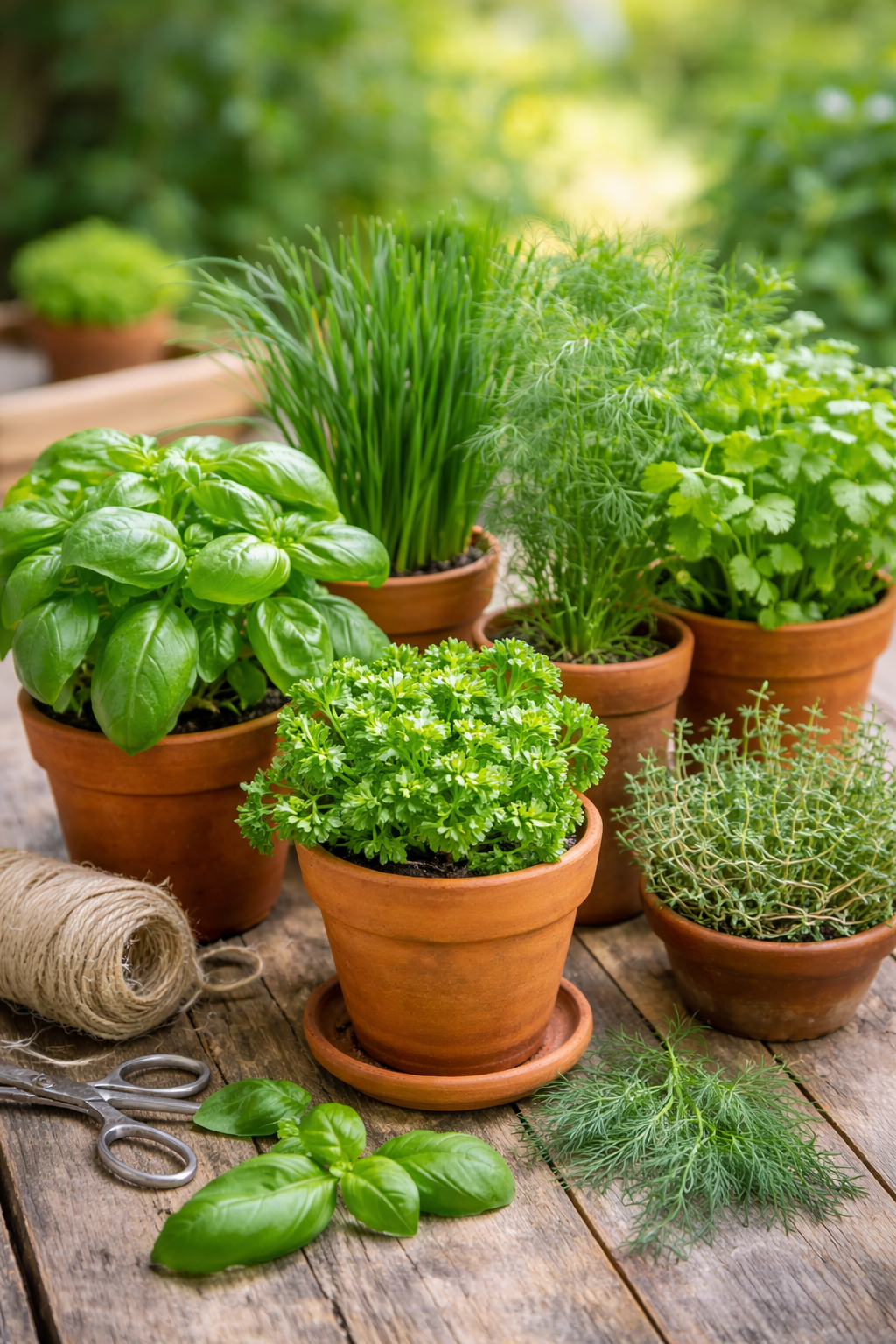
6 Easy Herbs to Try Indoors
You do not need to grow all six.
Choose one or two that you actually use in your kitchen and begin there.
1. Basil
Basil is one of the most satisfying herbs to grow because the scent appears as soon as you touch the leaves.
It is lovely for pasta, tomatoes, salads, sandwiches, and simple summer meals.
Basil likes plenty of light and should not be allowed to dry out completely.
If you want a quick, cheerful first pot, basil is a lovely place to start.
2. Chives
Chives are simple, useful, and do not take up much room.
Snip a little over:
- eggs
- potatoes
- soups
- salads
- cream cheese
- simple sandwiches
Chives are also among the herbs that can tolerate somewhat lower indoor light levels than many sun-loving herbs.
3. Parsley
Parsley may take a little patience at the beginning, but once established it is wonderfully useful.
It works well in:
- soups
- potatoes
- salads
- sauces
- simple vegetable dishes
It is one of those herbs that quietly earns its place in the kitchen.
4. Dill
Fresh dill is lovely with potatoes, cucumber salads, fish, yogurt sauces, and simple summer dishes.
Because dill grows upright, give it a little room rather than packing too many seedlings into one pot.
Parsley, dill, and cilantro are all members of the carrot family and generally prefer slightly more moisture and deeper, looser soil than many Mediterranean herbs.
5. Cilantro
Cilantro is useful if you enjoy tacos, rice bowls, salads, soups, or fresh sauces.
It can be grown indoors, and it is another herb that can tolerate somewhat lower light levels compared with herbs such as rosemary or thyme.
Rather than planting a huge amount at once, try a small sowing and repeat later if you enjoy using it.
6. Mint
Mint is refreshing, fragrant, and useful for:
- tea
- cold drinks
- fruit
- yogurt
- simple desserts
Give mint its own pot. It has a reputation for spreading enthusiastically when given the chance.
Keep the Setup Simple
You do not need an elaborate indoor gardening station.
A basic setup can be:
- a few small pots
- well-draining potting mix
- herb seeds or starter plants
- a tray to protect the windowsill
- simple plant labels
- a bright window
Containers used for herbs should have drainage holes so excess water can escape.
That really can be enough.
A Simple Windowsill Planter Can Keep Everything Tidy
If you prefer having several herbs together without lots of separate pots scattered across the windowsill, a compact planter with individual sections can make the setup feel much neater.
I especially like the idea of separate pots because you can grow herbs with slightly different watering needs without putting everything into one large container.
See this compact windowsill herb planter on Amazon
You absolutely do not need a special planter to start.
But if having one tidy setup makes you more likely to actually use and enjoy it, it can be a practical little upgrade.
How Much Light Do Indoor Herbs Need?
Light is probably the most important part of growing herbs indoors.
Many herbs prefer around six hours of direct sunlight, although some — including chives and cilantro — can tolerate less.
A bright south-facing window is ideal if you have one.
If your herbs begin to look:
- pale
- thin
- stretched
- weak
- unusually small
they may simply need more light.
What If Your Kitchen Window Is Too Dark?
Not every home has the perfect sunny windowsill.
That does not mean you need to give up on the idea.
A small grow light can provide extra light without turning your kitchen into a complicated indoor farm.
For a tiny herb corner, I would keep it simple: one adjustable lamp that can sit beside a few pots is plenty.
See this simple indoor plant grow light on Amazon
For me, the goal would still be to keep this feeling like a pleasant home ritual — not another project that needs managing.
A Few Tiny Tips That Make a Big Difference
Do not overwater
More water is not always kinder.
Water when the potting mix begins to dry rather than automatically watering every day. Basil is one herb that should not be allowed to dry out completely.
Rotate your pots
Plants naturally lean toward the light.
Turning the pot every few days can help the plant grow more evenly.
Give seedlings some space
If lots of seeds germinate together, thin them rather than trying to keep every seedling.
A few stronger plants are easier to care for than a crowded pot of weak ones.
Harvest a little at a time
You do not need to wait for a huge plant.
A few chives on an egg or a couple of basil leaves on tomatoes already make your little garden useful.
You Do Not Have to Start From Seed
Seeds are inexpensive and fun to watch grow, but they are not the only option.
If you are already exhausted, buying one healthy herb plant and putting it on the windowsill is still an indoor herb garden.
Starting from seed generally requires more time and effort than beginning with an established plant.
There is no prize for making the project harder.
Choose the version that fits your energy.
Turn It Into a Five-Minute Ritual
This is the part I like most.
Make a cup of tea or coffee.
Put on something quiet in the background.
Check the soil.
Water one pot if it needs it.
Touch the leaves.
Notice the scent.
Snip something for dinner.
Then stop.
You do not have to turn caring for plants into another responsibility.
Let it remain something small.
Start With Just One Pot
If you are tempted to buy six packets of seeds, twelve pots, labels, soil, tools, and a full indoor growing system, try resisting for a moment.
Start with one herb.
Basil.
Chives.
Mint.
Whatever you actually enjoy.
See whether tending it feels pleasant.
If it does, add another.
A tiny indoor herb garden does not need to become impressive.
It just needs to bring a little green into the room.
Final Thoughts
Caregiving can make life feel very practical.
There is always something useful that needs doing.
Growing a few herbs indoors does not solve that.
But it can create one small corner that smells like basil, mint, or fresh soil instead of medication, paperwork, or laundry.
And sometimes a tiny green thing growing on the windowsill is enough to make an ordinary day feel a little lighter.
Small green moments count.